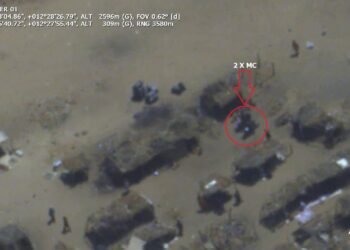
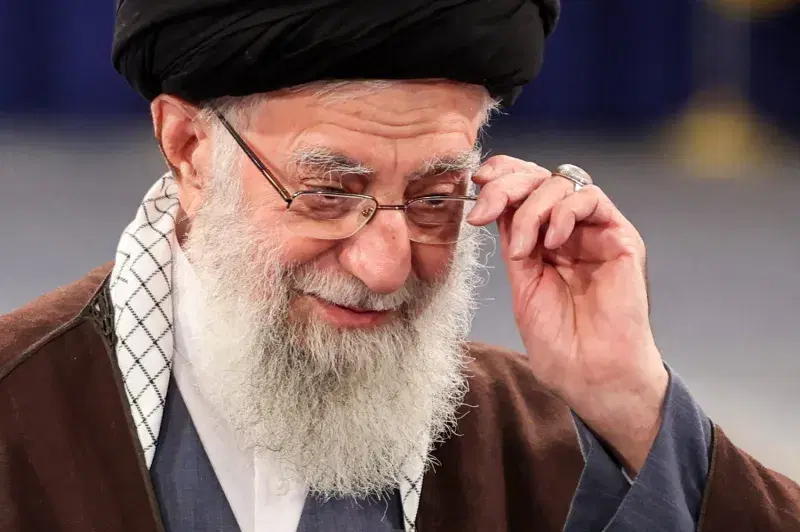
Iran’s Supreme National Security Council has confirmed that Supreme Leader Ayatollah Ali Khamenei was killed in his office early Saturday morning, according to a statement broadcast across multiple state television channels.
In one televised announcement, the broadcast said said the nation would observe 40 days of mourning. The Assembly of Leadership Experts, the powerful clerical body responsible for appointing the Supreme Leader, is expected to convene urgently to select a successor.
In another state’s statement on Telegram, it reads that “The Supreme Leader of the Islamic Revolution of Iran was martyred at his workplace in the Beit Rahbari (his compound).
“He was carrying out his assigned duties and present at his place of work (his office) at the moment of martyrdom, and this attack took place in the early hours of Saturday morning.”
The confirmation comes amid intense military exchanges. Iran’s Red Crescent reported that more than 200 people have been killed in the ongoing strikes, while CBS News, citing sources, said roughly 40 Iranian officials are among the dead.
Following the announcement, Iran launched retaliatory attacks across the Middle East, targeting US allies and locations hosting American military bases. Explosions were reported in Dubai, Doha, Bahrain and Kuwait, marking a sharp expansion of the conflict beyond Iran’s borders.
In the United Kingdom, Prime Minister Sir Keir Starmer said British forces are participating in “co-ordinated regional defensive operations” aimed at protecting UK nationals and regional partners as tensions continue to rise.
US President Donald Trump reacted earlier by describing Khamenei as “one of the most evil people in history,” adding that his death represents “the single greatest chance for the Iranian people to take back their country.” Trump also signalled that American military operations would continue, with explosions still being reported across Tehran.
However, the operation has sparked political debate in Washington. Under US law, a formal declaration of war requires congressional approval, and lawmakers are divided, largely along party lines, over the legality and scope of the military action.
The United Nations has also weighed in, warning that the strikes risk undermining peace and stability across the wider region.