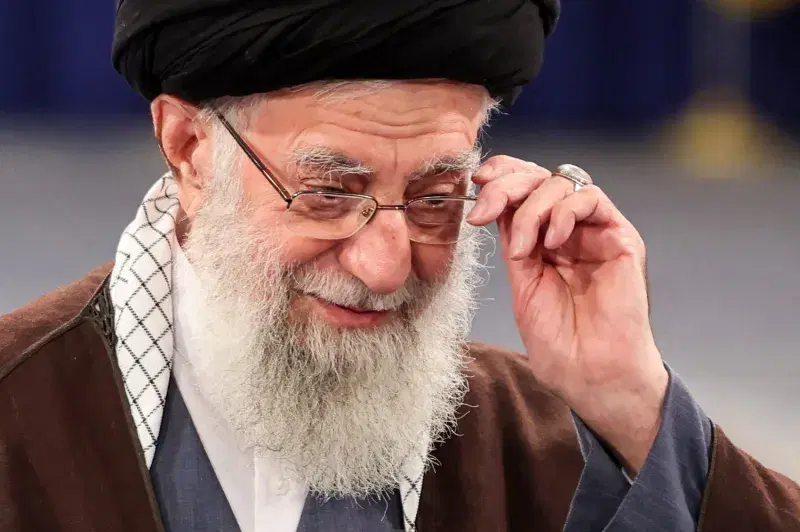
Conflicting claims about the fate of Iran’s Supreme Leader Ayatollah Ali Khamenei have ignited global debate after joint US-Israeli military strikes on Iranian soil, with President Donald Trump and Israeli Prime Minister Benjamin Netanyahu suggesting he may have been killed, even as Tehran has not confirmed the news yet, suggesting that it is all fake.
In a post on Truth Social early Sunday, Trump declared that Khamenei, long considered one of Iran’s most powerful and influential leaders, is dead, calling him “one of the most evil people in history” and framing the strikes as a move toward justice for victims of Iranian policies.
Asked by reporters about claims that Khamenei had been killed during the coordinated military offensive, Trump told NBC News that “we feel that that is a correct story,” while also adding that he would not speak “definitively” until further evidence was confirmed. He also suggested that “most” of Iran’s senior leadership had been eliminated in the strikes.
Netanyahu, speaking on national television, echoed the claim, saying there were “growing signs” that the supreme leader may be “gone” after parts of Iran’s leadership and military infrastructure were hit. He urged Iranians to “take to the streets and finish the job,” though he stopped short of formally announcing Khamenei’s death and did not present direct proof.
Iran denies the claims
Iranian authorities have strongly rejected the reports, describing them as psychological warfare and misinformation. Iran’s foreign ministry and state media have said that Khamenei and other senior officials remain alive and in command, despite the strikes. One Iranian official accused the United States and Israel of spreading confusion and “mental warfare” tactics.
State news agencies in Iran also reported that the supreme leader was “firmly commanding the field” and alive, countering the claims circulating outside the country.
The background
The controversy stems from a major military operation involving the United States and Israel, reportedly aimed at crippling Iran’s nuclear program, missile capabilities, and high-level leadership, including targeting command structures and senior figures. Researchers and media outlets have highlighted that Iran’s supreme leader has wielded extensive control over political, military, and religious institutions since 1989.
In what US President Donald Trump referred to as “major combat operations,” the US and Israel have attacked several areas throughout Iran, including Tehran, the country’s capital.
Following weeks of Trump’s increasing threats and eight months after the US and Israel fought a 12-day war against Iran, the attacks occur as the US and Iran negotiate Iran’s nuclear and ballistic missile programs.
Iran has retaliated by firing missiles targeting US military installations in the Middle East and northern Israel. There are currently few details available regarding the casualties and damage in Iran and Israel.
While some outlets and anonymous officials have stated that Khamenei’s body was recovered from the rubble of his compound, there is no independent verification or official announcement from Iran confirming this.
If true, the death of a figure like Khamenei, one of the longest-serving authorities in the region, would represent a historic shift in Middle Eastern geopolitics and could trigger a power vacuum or succession crisis in Iran.
But with Tehran issuing denials, global leaders and observers remain cautious, emphasizing the need for verified information.