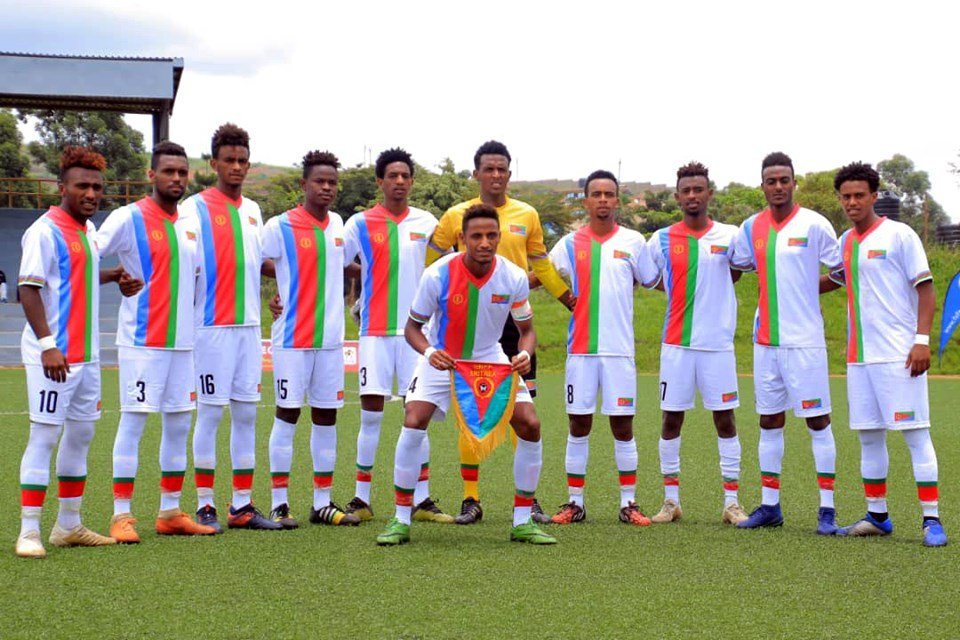
The disappearance of seven Eritrean national team members in South Africa is not a unique incident; rather, it is the most recent development in a long-standing trend that has come to characterize the nation’s football narrative outside of the field.
Reports that some players did not return with the team cut short the celebrations following Eritrea’s historic 2-1 victory over Eswatini, which qualified them for the Africa Cup of Nations qualifying group stage for the first time in nearly 20 years. While some of the group members moved on, at least seven players are believed to have escaped, and there are indications that they might still be in South Africa.
But for people who watch Eritrean football, this news isn’t very surprising.
ENigeria Newspaper findings show that Eritrean players have used international competitions as a way to leave the country and often seek asylum abroad for more than ten years. Since 2009, dozens of players, and in some cases whole teams, have gone missing while on trips abroad. There were similar cases in Uganda, Botswana, Kenya, and other African countries, which shows that this is a systemic problem, not just a few people being bad.
Eritrea’s very strict political and social climate is at the heart of this pattern.
The country has a very tightly controlled system that many people call authoritarian. Citizens have very few freedoms when it comes to moving around, speaking their minds, and finding work. Travel outside of Eritrea is very tightly controlled. One of the few legal ways for young people to leave the country is to play sports for other countries.
Even then, going back home is often thought of as a much less appealing choice.
One of the most common reasons for these defections is the country’s policy of indefinite national service, which puts many citizens, especially young men, in military or state labor roles that last indefinitely. For athletes, this means that their careers can end suddenly, and there is no guarantee of professional growth or financial stability.
The situation is made worse by economic problems. Eritrea is still one of the poorest countries in the world, with few job opportunities and low pay. For footballers who have better chances abroad, the difference can be huge and even life-changing.
Limits on information and speech are also very important. The government runs only a few media and communication channels, and the state keeps a close eye on them. There is almost no independent journalism, and access to the internet is limited and closely watched. In this kind of place, it’s rare for people to disagree, and when they do, it’s often dangerous.
“This is heartbreaking,” a source familiar with the Eritrean football system recently told BBC.
“They are killing Eritrean football. It’s not easy for the players to ask for an explanation. They may send you to jail for protesting. You can just wait and see what they decide.”
Football officials have made big decisions at times because they were afraid of a lot of players leaving. Eritrea, for example, pulled out of international competitions like World Cup qualifiers because they were worried that players would use games in other countries to escape. In one case, all scheduled matches were canceled without much explanation. This shows how hard it is to balance sports participation with state control.
Reports say that only a small number of players on the current team are based in Eritrea, and many of them are already part of the diaspora. Even among those who came back after the Eswatini match, there were a lot fewer people, which shows how big the problem is.
The effect on the sport has been huge. National celebrations have also been ruined by the players’ absence. Receptions for returning teams have previously been postponed due to officials’ embarrassment and political sensitivity.
Eritrea’s football teams may keep losing more than just games until the political, economic, and social conditions that caused them to lose change.