
The Federal Government on Thursday said vandalism and indiscriminate waste disposal are undermining critical infrastructure nationwide, linking recent flooding along the Lagos-Calabar Coastal Highway to blocked underground drainage systems.
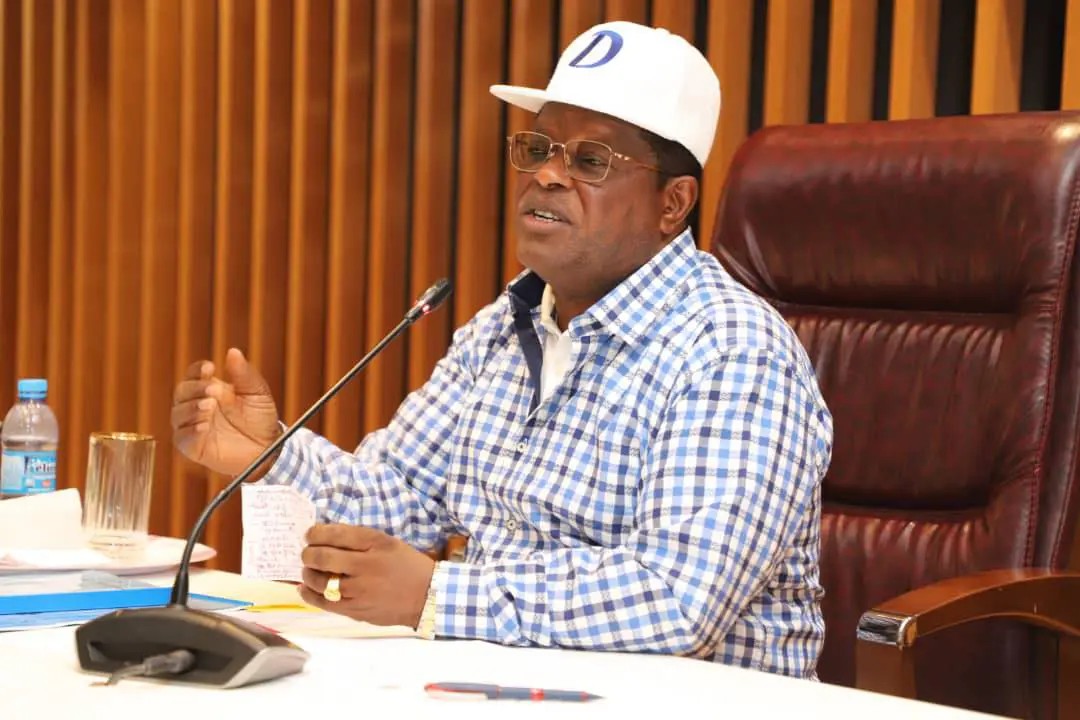
Minister of Works, David Umahi, told journalists in Abuja that repeated destruction of protective installations along the coastal corridor and other federal roads had become “alarming and unsustainable,” warning that the trend threatens the lifespan of newly built highways and bridges.
ENigeria Newspaper reports that the minister affirmed that refuse dumped into manholes and drainage channels along the Lagos stretch of the coastal road prevented stormwater from flowing freely, resulting in flooding. He said the situation reflects a broader pattern of public infrastructure abuse.
Beyond drainage issues, Umahi raised concerns over persistent vandalism along the coastal highway, describing it as a hotspot despite increased security deployment. He said protective fittings, including green barbed wires and connecting reinforcements installed to secure construction zones, had been repeatedly cut and stolen, while unauthorised access to restricted sections disrupted ongoing works.
The 700-kilometre highway, a flagship federal project designed to link Lagos to Calabar through several coastal states, is expected to boost trade and tourism. However, the first phase in Lagos has faced scrutiny over right-of-way and environmental concerns.
The minister also highlighted structural risks facing major Lagos bridges, including the Carter Bridge and the Third Mainland Bridge. He disclosed that experts had recommended the eventual demolition and reconstruction of Carter Bridge due to structural deficiencies, although temporary reinforcement would keep it operational for about three years.
Umahi attributed much of the damage to illegal sand mining around bridge foundations, explaining that the removal of supporting sand weakens bridge piles. He cited a recent case in which a miner allegedly struck and removed a bridge pile, adding that the company involved had been directed to face prosecution.
He further revealed that expansion joints on bridges — critical components that allow structures to adjust to temperature changes — had been stolen and sold as scrap. In one instance, suspects were apprehended while removing such joints from Carter Bridge.
Security technology has, however, aided enforcement efforts. Umahi said Closed-Circuit Television cameras installed on Third Mainland Bridge on the directive of Bola Tinubu had enabled swift identification and arrest of vandals.
The minister also cautioned against parking heavy trucks on bridges, stressing that such structures are designed for moving loads, not prolonged static weight, which can accelerate structural fatigue.
He maintained that the Federal Government had adopted reinforced concrete technology to extend road durability, noting that many ongoing projects are designed to last between 50 and 100 years. While acknowledging challenges in execution, he said the ministry remained committed to transparency and value for money.
Umahi urged citizens to take responsibility for protecting public assets, warning that repeated vandalism and environmental negligence would increase repair costs and slow infrastructure development nationwide.