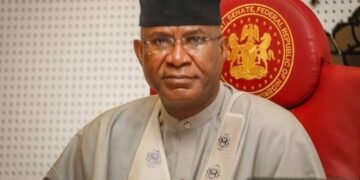


The Chief of Defence Staff (CDS), Gen Olufemi Oluyede, has emphasized that Nigeria can enhance national stability and gather actionable intelligence through the controlled rehabilitation of surrendered terrorists.
He made the remarks while discussing the Operation Safe Corridor (OPSC), a Disarmament, Rehabilitation, and Reintegration (DRR) program that has processed thousands of former militants since 2016.
Speaking at a high-level stakeholders’ meeting organized by the Defence Headquarters in collaboration with OPSC, Oluyede highlighted that structured surrender pathways weaken insurgent networks while enabling long-term peace and security.
“When properly screened and coordinated, surrender pathways degrade insurgent cohesion, generate actionable intelligence, and support long-term stability,” he stated.
The meeting, as ENigeria Newspaper learnt, brought together officials from federal ministries, the Office of the National Security Adviser (ONSA), state governments, and representatives from neighbouring countries including Burkina Faso, Chad, Niger, and Cameroon.
International partners such as Norway, the United Kingdom, the European Union, the Foreign, Commonwealth and Development Office (FCDO), the International Committee of the Red Cross (ICRC), and the International Organisation for Migration (IOM) were also in attendance.
Oluyede, who chairs the OPSC National Steering Committee, described the program as a critical component of Nigeria’s security framework and reiterated the country’s commitment to a comprehensive, whole-of-government approach to peacebuilding and recovery. Maj-Gen Jamal Abdusalam, Chief of Defence Operations, represented the CDS at the session, further emphasizing the strategic significance of the initiative.
Meanwhile, Niger State Governor, Muhammad Bago, raised concerns about the displacement of communities due to terrorist and bandit activities in the state.
Speaking to journalists after a special prayer service marking his 52nd birthday at the Government House in Minna, he dedicated the occasion to seeking divine intervention for national security challenges.
“There’s no better time to pray for God’s mercy and intervention than now,” Bago said.
Security analysts have also expressed alarm over the expanding presence of jihadist groups in neighboring Benin Republic, warning of serious security and economic consequences for Nigeria if the trend continues.
Through the OPSC, the Nigerian government continues to advance its vision of structured reintegration, believing that controlled rehabilitation not only promotes peace but also strengthens intelligence gathering against active terrorist networks.