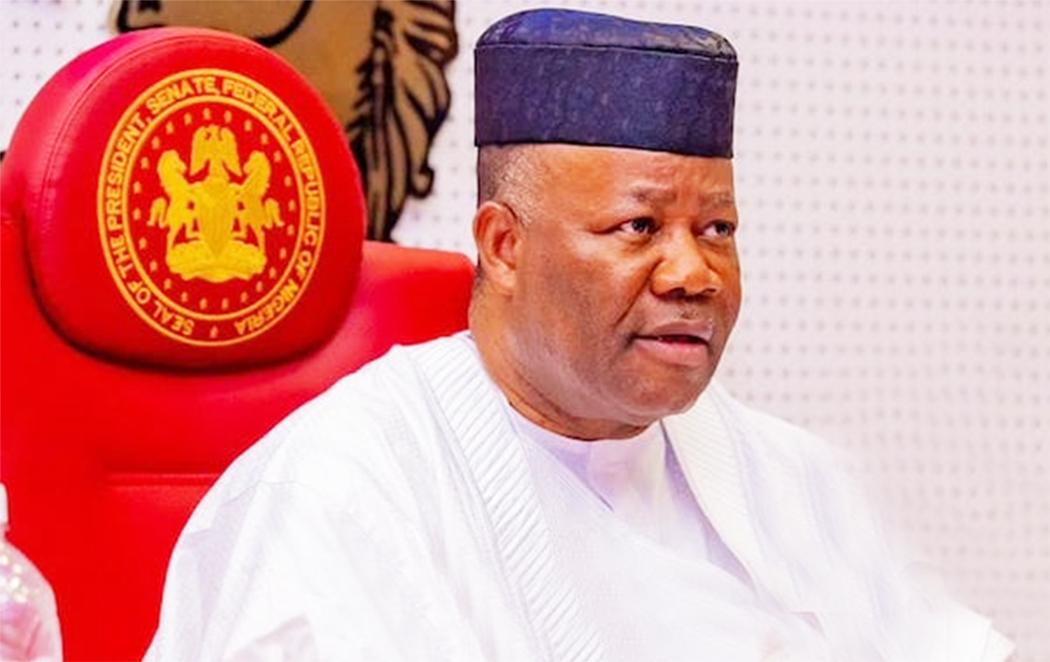
President of the Nigerian Senate, Godswill Akpabio, on Tuesday declared that lawmakers had “saved Nigeria’s democracy” after voting to retain manual transmission of election results where electronic upload fails.
The remark followed a tense division in the chamber during consideration of the Electoral Act, 2022 (Repeal and Re-Enactment) Bill, 2026, in which senators rejected a proposal to make real-time electronic transmission mandatory without exception.
As gathered by ENigeria Newspaper, by a vote of 55 to 15, the upper legislative chamber upheld a proviso in Clause 60 allowing manually collated results, particularly Form EC8A, to stand as the primary record in the event of network failure.
The decision marked the second time in one week that the Senate declined to enforce compulsory electronic transmission.
The vote came after a rowdy session triggered by Senator Enyinnaya Abaribe’s call for a division on Clause 60(3). Abaribe had sought to delete the provision permitting manual transmission where electronic systems fail, arguing that allowing both options could undermine transparency.
Citing procedural rules, Deputy Senate President Barau Jibrin initially challenged the move to revisit the clause. However, Senate Leader Opeyemi Bamidele clarified that a motion for rescission had reopened the bill for fresh consideration, making the request procedurally valid.
After nearly an hour in closed session, lawmakers returned to the floor for a standing vote. When the count was concluded, the majority supported retaining the manual fallback option.
Akpabio, while acknowledging the dissenting voices, maintained that preserving manual transmission safeguards the process in areas with weak connectivity.
“Those who voted for the proviso have just saved Nigeria’s democracy,” he said, adding that the debate reflected the “beauty of democracy in action.”
Opposition senators, however, warned that failing to mandate full electronic transmission could weaken public confidence in future elections. The debate comes amid sustained calls from civil society groups for real-time digital uploads to curb manipulation and enhance transparency ahead of the 2027 general elections.
Earlier in the day, the Senate had rescinded its previous passage of the bill and recommitted it to the Committee of the Whole following concerns raised about inconsistencies in several clauses and the timing of the 2027 elections.
In a related development confirmed by ENigeria Newspaper, lawmakers amended Clause 28 of the bill, reducing the statutory notice period for elections from 360 days to 300 days. The adjustment grants the Independent National Electoral Commission (INEC) greater flexibility in scheduling the 2027 presidential and National Assembly polls.
Senate leaders explained that the earlier 360-day requirement could result in elections coinciding with the Ramadan fasting period next year, potentially affecting voter turnout, logistics, and overall participation. By trimming the notice window, INEC may now fix the elections between December 2026 and January 2027, avoiding a clash with Ramadan and, lawmakers argue, strengthening the inclusiveness and credibility of the process.
With these twin decisions, the Senate has signalled its preference for administrative flexibility over rigid digital mandates as preparations gradually intensify for the 2027 electoral cycle.