The US has told its non-essential staff to leave its embassy in Abuja and has tightened travel restrictions on Nigeria because the country’s security situation is getting worse.
The US Department of State released an updated advisory on Wednesday that allowed non-emergency government workers and their families to leave the US Embassy. They also warned that the security situation had gotten much worse. It also told Americans to think twice about going to Nigeria because of worries about terrorism, kidnapping, violent crime, and civil unrest.
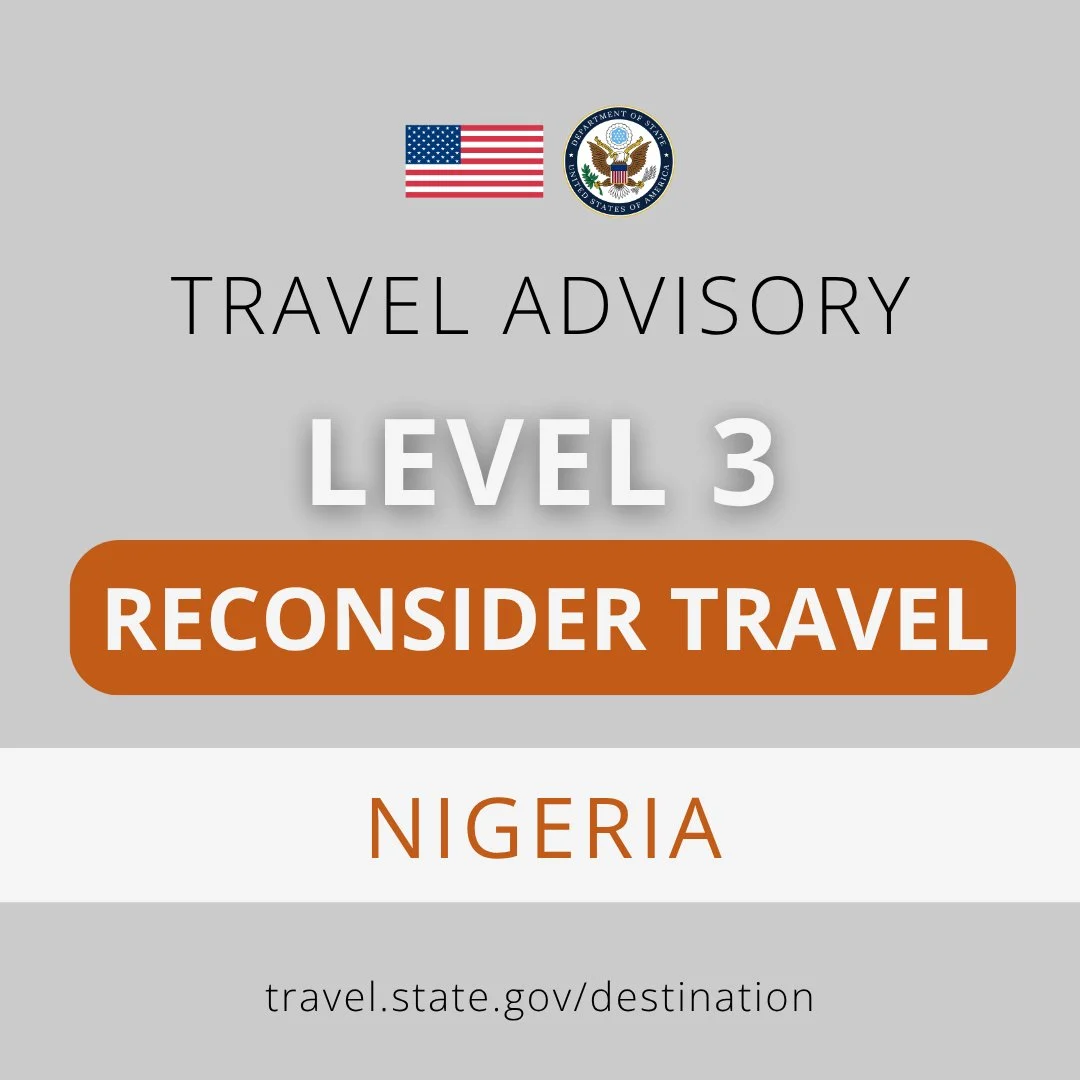
The advisory placed Nigeria under a “Level 3: Reconsider Travel” classification, while designating 23 states as “Level 4: Do Not Travel” zones, the highest risk category.
New additions to the restricted list include Plateau, Jigawa, Kwara, Niger, and Taraba states, bringing the total number of high-risk states to 23.
The State Department says that armed groups, widespread crime, and repeated violence between communities are making the affected areas more dangerous. States like Borno, Yobe, and parts of Adamawa in the north were flagged for terrorism risks. States like Kaduna, Katsina, Zamfara, Kano, Sokoto, Gombe, and Bauchi were flagged for a mix of banditry, kidnapping, and civil unrest.
The warning also included parts of the North-Central region, such as Kogi, Kwara, Niger, and Plateau. Authorities there said there was armed violence, kidnapping, and security operations that weren’t always safe.
In the South and South-East, Abia, Anambra, Bayelsa, Delta, Enugu, Imo, and Rivers states, except for Port Harcourt, were listed as having high levels of crime, kidnapping, and violent protests.
The US government warned that violent crimes such as armed robbery, carjacking, and kidnapping for ransom are widespread across Nigeria, noting that foreign nationals, particularly Americans, are often perceived as high-value targets.
It further cautioned that terrorist attacks could occur without warning in public places, including markets, hotels, shopping centres, places of worship, and transport hubs.
Beyond security concerns, the advisory highlighted challenges in accessing reliable healthcare services, stating that medical facilities in Nigeria are generally limited and may not meet international standards.
The State Department advised US citizens who must travel to Nigeria to exercise extreme caution, avoid large gatherings and demonstrations, and establish personal safety measures, including “proof of life” protocols. It also encouraged travellers to enrol in the Smart Traveler Enrollment Program (STEP) to receive real-time updates and emergency assistance.