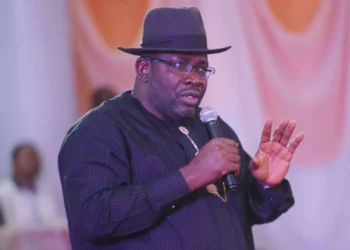

After two days of tense negotiations, the Federal Government has secured a peace deal between Dangote Petroleum Refinery and the Petroleum and Natural Gas Senior Staff Association of Nigeria (PENGASSAN), following a dispute over workers’ right to unionise and the sudden disengagement of staff.
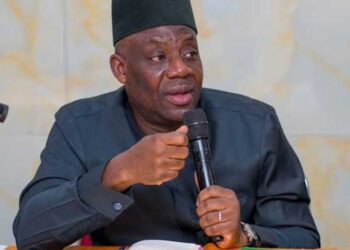
The Minister of Labour and Employment, Mohammed Maigari Dingyadi, announced the resolution on Wednesday in a statement, noting that the breakthrough came after lengthy conciliation meetings in Abuja.
“Unionisation is a right of workers in accordance with the laws of Nigeria, and this right should be respected,” the Minister said.
According to the terms of the agreement:
Dangote Group management will redeploy the disengaged workers to other companies within the group, with no loss of pay.
No staff will be victimised for their involvement in the unionisation drive.
PENGASSAN, in turn, agreed to begin the process of calling off the strike.
Both parties signed off on the resolution in good faith.
Workers’ Grievances Sparked the Showdown
While the truce has calmed immediate tensions, refinery staff maintain that the crisis highlighted long-standing frustrations over poor conditions, stagnant pay, and inadequate safety provisions.
READ ALSO: Petroleum Importers Lose Billions, As Dangote Reduces Price…
A process engineer at the refinery, who spoke on condition of anonymity, said workers only joined PENGASSAN after years of unresolved complaints.
“All the while, no promotion. The 25 per cent salary increase only came in January after BUA raised its staff salaries by 50 per cent for the third time, even though inflation has gone up by almost 300 per cent since I joined,” he said.
The staff member alleged that Nigerian engineers were poorly compensated compared to expatriates.
“We train them when they arrive, but after a while they are made our bosses. Some of them earn as much as $26,000 a month while our pay stagnates at about N400,000 — and after deductions, we sometimes take home less than N200,000.”
He also cited overtime and safety issues, noting that employees worked 12–13 hours daily but were only paid for three hours of overtime instead of four.
“We work long hours without breaks, but they deduct one hour from our overtime pay as if we had rested,” he added.
Health and Welfare Concerns
The engineer further criticised the company’s health policy, claiming that the health management scheme (HMO) offered little value.
“They say we have HMO, but in reality we don’t. The drugs at the clinic are of poor quality, so we end up buying medicines ourselves,” he said.
Allowances, according to him, were also opaque.
“There’s a section in our salary slip called ‘others’. Before, it was N1,000. After the increment, it became N54,000. But everything we need — from hazard allowance to PPE — comes from there. That’s not sustainable,” he explained.
How Unionisation Took Root
The refinery dispute intensified when reports surfaced that expatriate staff had enjoyed massive salary boosts while Nigerian staff were largely left behind.
This triggered an unprecedented show of interest in PENGASSAN membership.
“The first day they asked us to join, about 900 signed. Within two hours, 1,000 had signed. The management was shocked,” the engineer said.
But shortly afterwards, workers returning from a shift were allegedly informed that they had all been sacked — sparking the industrial face-off that drew in the Federal Government.
A Fragile Peace Going Forward
With Wednesday’s agreement, sacked workers are expected to return under redeployment terms, while PENGASSAN is set to wind down strike action.
However, labour analysts say the grievances aired by workers — pay disparity, health coverage, and poor welfare — suggest that the Dangote Refinery will need more than a truce to restore trust and stability in its workforce.