
Global energy markets reacted sharply on Monday as escalating hostilities involving Iran, the United States and Israel triggered major disruptions to oil and gas production across the Gulf, ENigeria Newspaperm learnt.
Natural gas prices soared by nearly 50% after QatarEnergy, one of the world’s largest exporters of liquefied natural gas, suspended output following what it described as military attacks on its facilities.
According to BBC, the spike comes as Iran continues retaliatory strikes across the Middle East in response to ongoing US and Israeli attacks.
Brent crude, the global oil benchmark, climbed 10% to trade above $82 per barrel at one point on Monday. The jump followed reports that at least three vessels were attacked near the Strait of Hormuz over the weekend.
ENigeria Newspaper gathered that Tehran had earlier warned ships against navigating the strategic waterway, located south of Iran, through which roughly 20% of global oil and gas supplies pass.
Financial markets mirrored the uncertainty. In London, the FTSE 100 slipped by 1%, with the parent company of British Airways among the worst performers amid widespread disruption to Middle East airspace.
Major banks, including Barclays, Standard Chartered and HSBC, also recorded declines as investors weighed the risk that sustained energy price increases could fuel inflation and limit the ability of central banks to cut interest rates.
Across continental Europe, losses were steeper. France’s CAC-40 index fell 1.8%, while Germany’s DAX dropped 2.1% during afternoon trading.
Amid the turmoil, gold, often seen as a safe-haven asset in times of geopolitical instability, gained 2% to reach $5,388 per ounce.
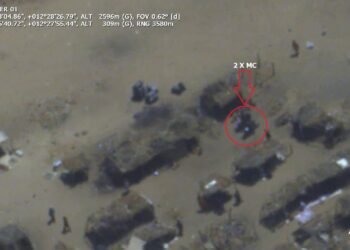
QatarEnergy confirmed it had halted LNG production after Qatar’s Ministry of Defence reported that a drone launched from Iran targeted a facility in Ras Laffan Industrial City. The ministry also said another drone attempted to strike a water tank at a power plant in Mesaieed, south of Doha.
In neighbouring Saudi Arabia, state oil giant Saudi Aramco temporarily shut down its major Ras Tanura refinery after it was hit by a drone.
Shipping activity at the entrance to the Strait of Hormuz has slowed significantly, with analysts cautioning that a prolonged disruption could drive prices even higher.
The UK Maritime Trade Operations centre reported that two vessels were struck, while an “unknown projectile” detonated near a third ship.
Despite the initial surge, oil prices later moderated. Brent crude retreated to around $79 per barrel, while US-traded oil remained up approximately 7.6% at $72.20.
Saul Kavonic, head of energy research at MST Marquee, told the BBC that markets were reacting cautiously rather than panicking.
“There is more clarity that so far, oil transport and production infrastructure hasn’t been a primary target by any side,” he said, adding that traders would closely monitor whether traffic through the Strait of Hormuz resumes.