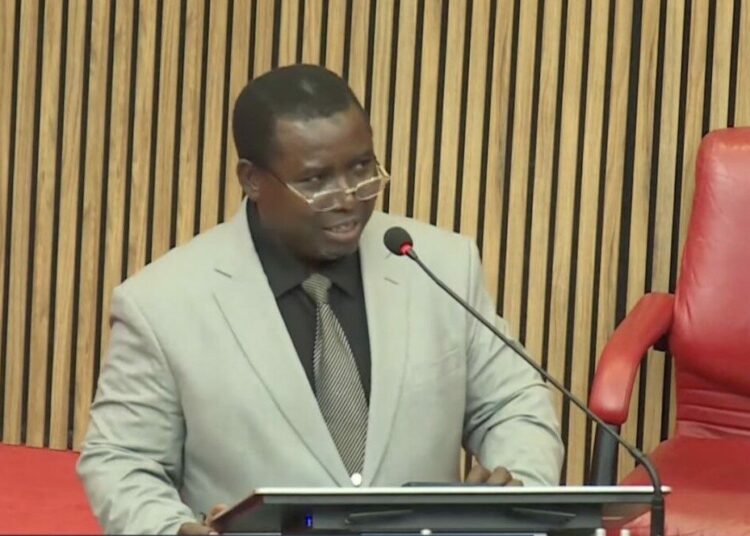
The chairman of the Independent National Electoral Commission (INEC), Joash Amupitan, has revealed what Nigerians, especially media professionals, must do during election periods to safeguard the integrity of the 2027 general elections.
ENigeria Newspaper gathered these when the INEC Chairman spoke at the 81st general assembly of the Broadcasting Organisations of Nigeria (BON) in Abuja. Amupitan stressed the need for responsible information dissemination, real-time fact-checking, and professionalism, warning that the battle for credible elections is now fought beyond polling units.
“Fact-check in real-time, mobilise voters’ turnout and choose professionalism over profit,” he revealed, urging broadcasters and stakeholders to prioritise national interest over commercial gains.
Amupitan warned that misinformation poses a serious threat to democratic processes.
“In the 2027 General Election, the most dangerous weapon will not be a ballot-snatcher’s gun, but a smartphone-user’s lies amplified by an uncritical broadcast station,” he said.
He described the media space as central to electoral outcomes, noting that “elections are no longer just contested at the polling units, they are contested in the information space.”
The INEC chairman also highlighted provisions in the Electoral Act 2026 aimed at ensuring fairness, including mandatory equal airtime for political parties and penalties for violations. “
The Act mandates fairness and balance. You must provide a level playing field,” he said, adding that media organisations that fail to comply risk fines of up to N5 million, while responsible officers could face imprisonment.
He further pointed to restrictions such as a 24-hour media blackout before election day and laws criminalising hate speech and inflammatory content, which he said are designed to prevent last-minute manipulation of voters.
Amupitan highlighted persistent issues despite these steps, such as lax enforcement and the predominance of powerful political figures in the media. He pointed out that equal access is undermined because political actors with greater financial resources dominate broadcast space.
He urged increased cooperation between INEC, media outlets, security services, and the legal system to close these loopholes and guarantee responsibility and compliance.
Amupitan also referred to the media as “the primary infrastructure of our democracy,” cautioning that how information is handled in the run-up to elections may ultimately determine whether or not the electorate’s will is respected.