Leaders of former Niger Delta agitators have warned President Bola Ahmed Tinubu to decentralise the pipeline surveillance contract awarded only to Tompolo’s Tantita across the region or risk losing political support ahead of the 2027 general elections, ENigeria Newspaper has learnt.
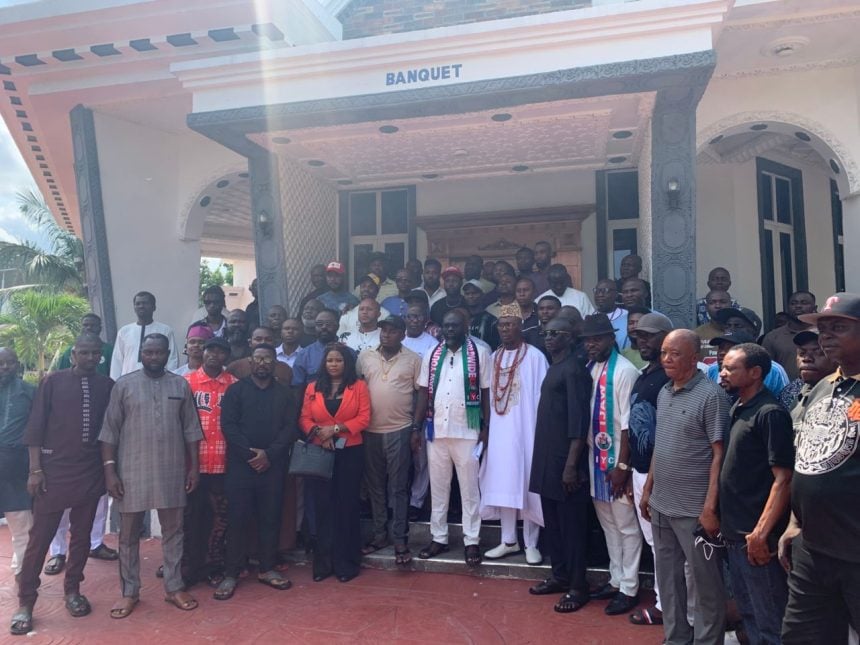
The leaders, operating under the Niger Delta Stakeholders Forum (NDSF), made the demand during a meeting held at the palace of the Amanyanabo of Okochiri Kingdom, King Ateke Michael Tom, in Rivers State. They insisted that the contract should be distributed among leaders from each of the nine oil-producing states namely Abia, Akwa Ibom, Bayelsa, Cross River, Delta, Edo, Imo, Ondo and Rivers.
Speaking at the gathering, General Boy-Loaf stressed the political implications of the current arrangement, saying, “If the President really wants to achieve what he wants in 2027, he has to show love, because only one person cannot deliver. Nobody should deceive him.”
Echoing similar concerns, General Shoot-at-Sight rejected reports that any restructuring of the contract would be delayed until after the 2027 elections, describing such a move as misleading.
According to him, “Last year, we heard that the work would be split state by state before the election. But till now, we have not seen anything.”
He argued that the concentration of the contract in the hands of a single individual undermines the contributions of other stakeholders in the region.
“The different states have qualified leaders and structure to provide pipeline security adequately. The idea of handing the whole job to only one person is demeaning to other agitators who fought for the freedom of the region,” he said.
Recalling earlier arrangements, Shoot-at-Sight noted that decentralisation previously boosted oil output. “We were doing this job state by state under President Goodluck Jonathan. The next president came; he made it political and cancelled it. We have been on this matter for years,” he added.
He further claimed that the current structure has negatively affected production, stating, “When we did disarmament in 2009, Nigeria oil production increased, because the contract was split. Since they gave this job to only one person, the oil production has not increased again.”
The agitators maintained that a return to the earlier model would also improve employment opportunities across the region. “We are saying that the contact should be split. Then, we had quota for employment in each states. Now, we see that the job is now for politicians and that is not the original design,” he said.
The group urged the federal government to urgently review the arrangement, insisting that equitable distribution of the surveillance contract remains key to stability and cooperation in the Niger Delta.