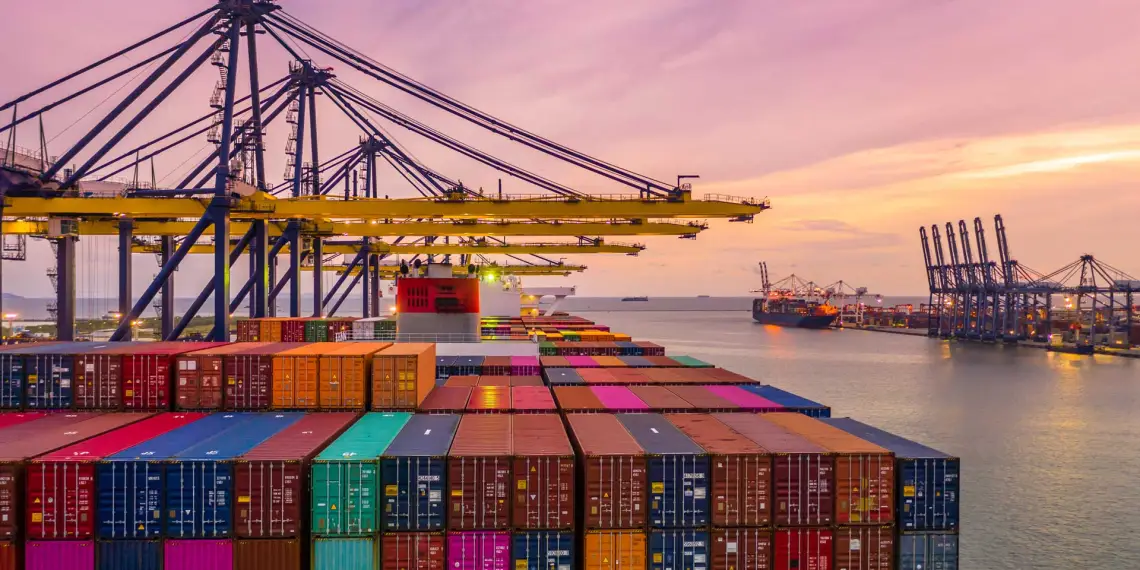
Nigeria has secured a £746 million export finance agreement with the United Kingdom to modernise its busiest seaports, in a move aimed at boosting trade efficiency and positioning the country as a regional maritime hub, ENigeria Newspaper has confirmed.
The deal, which is backed by UK Export Finance, will focus on the redevelopment of Lagos Port Complex and TinCan Island Port Complex, which together account for over 70 per cent of Nigeria’s import and export activities.
Announced during President Bola Ahmed Tinubu’s state visit to the United Kingdom, the project is expected to significantly improve maritime logistics, enhance operational efficiency, and deepen trade relations between both countries.
“Together, the two ports handle more than 70 per cent of Nigeria’s imports and exports and serve as the central arteries of the nation’s maritime trade,” the Federal Ministry of Marine and Blue Economy said in a statement.
The financing arrangement, facilitated by Citibank, will enable British firms to play a key role in the project, including a £70 million contract to be executed by British Steel.
The redevelopment plan includes deepening of harbour channels, strengthening of quay walls, and installation of modern cargo-handling equipment, alongside a full-scale digital transformation of port operations.
Speaking on the initiative, Minister of Marine and Blue Economy, Gboyega Oyetola, described the project as a major overhaul of the country’s maritime infrastructure.
“What we are set to do is not merely an upgrade, but a comprehensive transformation that will bring our ports into alignment with international best practice,” he said.
“Modern infrastructure supported by digitalised and automated processes will significantly enhance efficiency, transparency, and operational reliability. Our objective is clear: to create a port system that is modern, competitive, and capable of serving as a strategic maritime hub for West and Central Africa,” he added.
The initiative, which is planned to start in the first quarter of 2026 and last for 48 months, will automate customs clearance procedures and integrate the National Single Window platform to improve trade operations.
Nigeria looks to improve its standing in regional and international trade, which is now valued at around £8.1 billion yearly with the United Kingdom. The country is also anticipated to increase port capacity and eliminate long-existing bottlenecks that have impeded cargo transportation.