Key religious figures, traditional authorities and international partners of the North-west region of Nigeria have urged stronger inclusion of women in efforts to address insecurity in the region, describing their participation as essential to lasting peace, ENigeria Newspaper learnt.
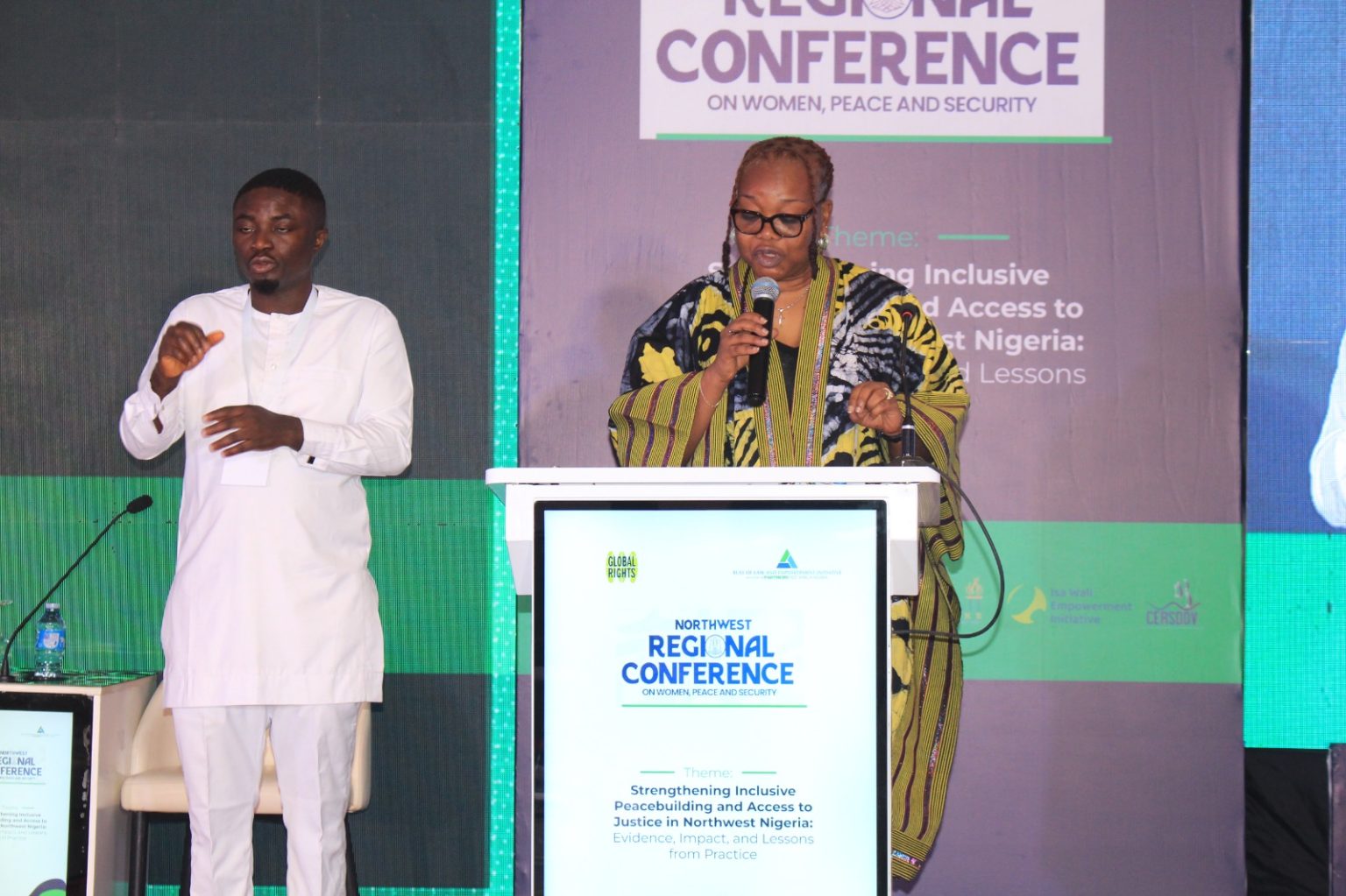
The call was made at the Northwest Regional Conference on Women, Peace and Security held under the Women, Peace and Security (WPS) framework. The event was convened by the Rule of Law and Empowerment Initiative (Partners West Africa Nigeria) in collaboration with Global Rights, with support from the United Kingdom’s Foreign, Commonwealth and Development Office (FCDO) Integrated Security Fund.
ENigeria Newspaper gathered that participants drawn from Katsina, Kebbi, Sokoto and Kano states, including traditional rulers, clerics, security officials and civil society groups, reviewed progress on community-based peacebuilding programmes and discussed strategies for sustaining gains.
In his keynote address, Bishop Matthew Hassan Kukah of the Catholic Diocese of Sokoto said Nigeria’s fight against insecurity would remain incomplete if systemic and cultural barriers continue to sideline women and vulnerable groups. He argued that while legal and religious frameworks promote justice, their impact depends on how they are interpreted and applied.
“It is not enough to have a constitution or sacred texts,” he said, questioning whether they are used to promote freedom or restrict it. Kukah warned that religion and culture have at times been exploited to justify inequality, but stressed that they also provide tools for liberation and reform.
Drawing parallels with civil rights movements in the United States and reconciliation efforts in Rwanda, he said meaningful change demands courage and grassroots involvement, especially from women. According to him, women already carry much of the responsibility for maintaining family and community stability, and excluding them from security decisions weakens national resilience.
“The future lies with our women. You don’t need permission from traditional rulers or religious leaders to claim your rights. This country is our father’s house. Nobody has a monopoly on the keys”, he added.
Representing the Sultan of Sokoto, Muhammadu Sa’ad Abubakar, Dr Mohammed Jabi Kilgori said traditional institutions remain central to conflict prevention because security challenges often surface first within communities.
“Women form an important part of every society, and empowering them translates to empowering the entire society”, he said.
Senior Special Assistant to the President on Community Engagement (North-Central), Abiodun Essiet, underscored the importance of grassroots-driven responses to insecurity.
“Women, in particular, play a critical role in peacebuilding and promoting social cooperation. Their inclusion in decision-making is essential for sustainable peace,” she said.
She added that, “Trust, dialogue, and inclusion are essential for preventing conflict and promoting stability. Insights from community engagement help bridge the gap between citizens and the Presidency and inform policy decisions.”
Executive Director of Partners West Africa Nigeria, Kemi Okenyodo, described the conference as an opportunity to assess impact and shape policy direction rather than simply closing a project phase.
She said the initiative strengthened community safety dialogue committees and partnerships aimed at fostering inclusion and improving justice delivery in Katsina, Kebbi, Sokoto and Kano states.
Stakeholders concluded that long-term stability in the Northwest will depend on structured collaboration among government institutions, civil society, traditional authorities and development partners with women playing a central role in shaping security solutions.