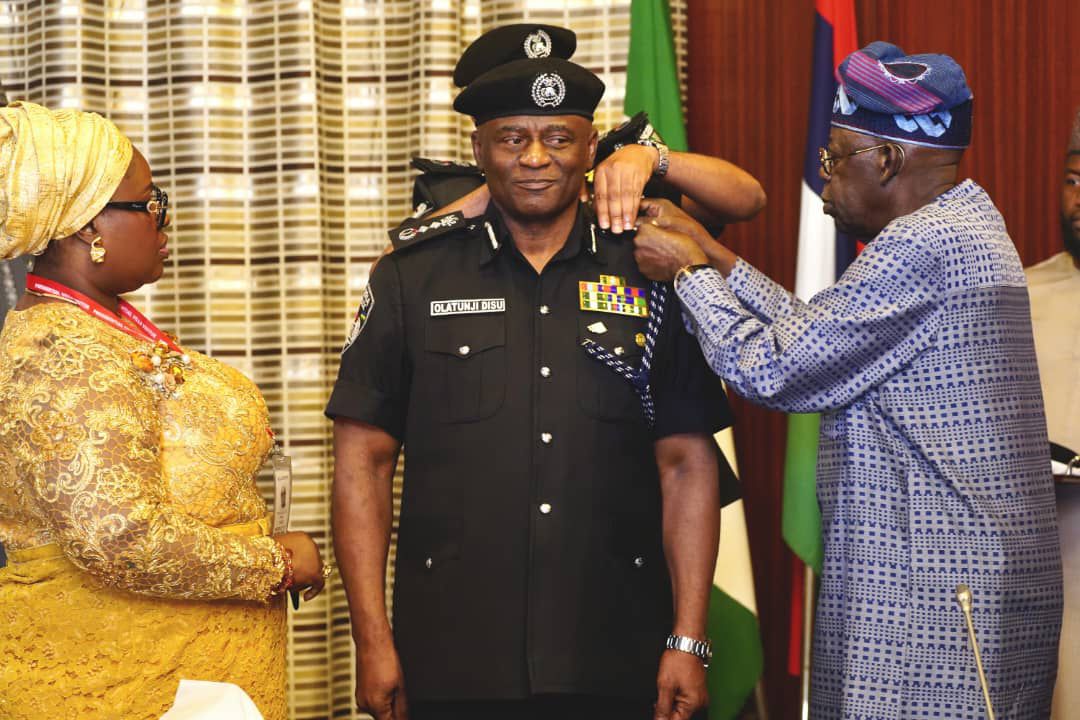
President Bola Ahmed Tinubu is expected to take a decisive step in the leadership transition of the Nigeria Police Force today as he convenes the Nigeria Police Council to formally consider the nomination of acting Inspector-General of Police, Olatunji Disu.
A couple of senior officials familiar with the development confirmed to ENigeria Newspaper that the council meeting will hold in Abuja, marking the beginning of the statutory process required to confirm Disu as the substantive Inspector-General of Police.
Under the Police Act 2020, the Police Council must review and deliberate on any presidential nominee for the office of Inspector-General.
“In compliance with the provisions of the Police Act 2020, President Tinubu will convene a meeting of the Nigeria Police Council shortly to formally consider the appointment of AIG Disu as substantive Inspector General of Police, after which his name will be transmitted to the Senate for confirmation,” the statement had said.
Today’s meeting is therefore a key procedural milestone in solidifying Disu’s appointment.
Disu has been serving in an acting capacity following the recent exit of former IGP Kayode Egbetokun. His nomination was announced shortly after the transition, with the Presidency indicating that the formal ratification process would follow without delay.
The Police Council, chaired by the President, comprises the 36 state governors, the Chairman of the Police Service Commission, and the Inspector-General of Police. Its endorsement is required before the nomination proceeds to the National Assembly.
Sources tell ENigeria Newspaper that once the council concludes its deliberations, Disu’s name will be transmitted to the Senate for legislative confirmation, potentially paving the way for him to become the 23rd indigenous Inspector-General of Police.
Disu, who joined the police in 1992, is regarded as a career officer with experience across tactical, administrative, and operational commands.
If confirmed, he will assume leadership of the force at a time when issues of security reform, officer welfare, and public trust remain central to national discourse.