The Nigerian Midstream and Downstream Petroleum Regulatory Authority (NMDPRA) has attributed the recent increase in petrol pump prices across the country to market forces operating under Nigeria’s deregulated downstream oil sector.
George Ene-Ita, NMDPRA’s spokesperson, said the price changes are a reflection of prevailing market realities rather than the result of regulatory decisions.
He made the remarks in an interview with the News Agency of Nigeria (NAN) while responding to public reactions over the latest adjustment in fuel prices, which has also been linked to tensions in the Middle East.
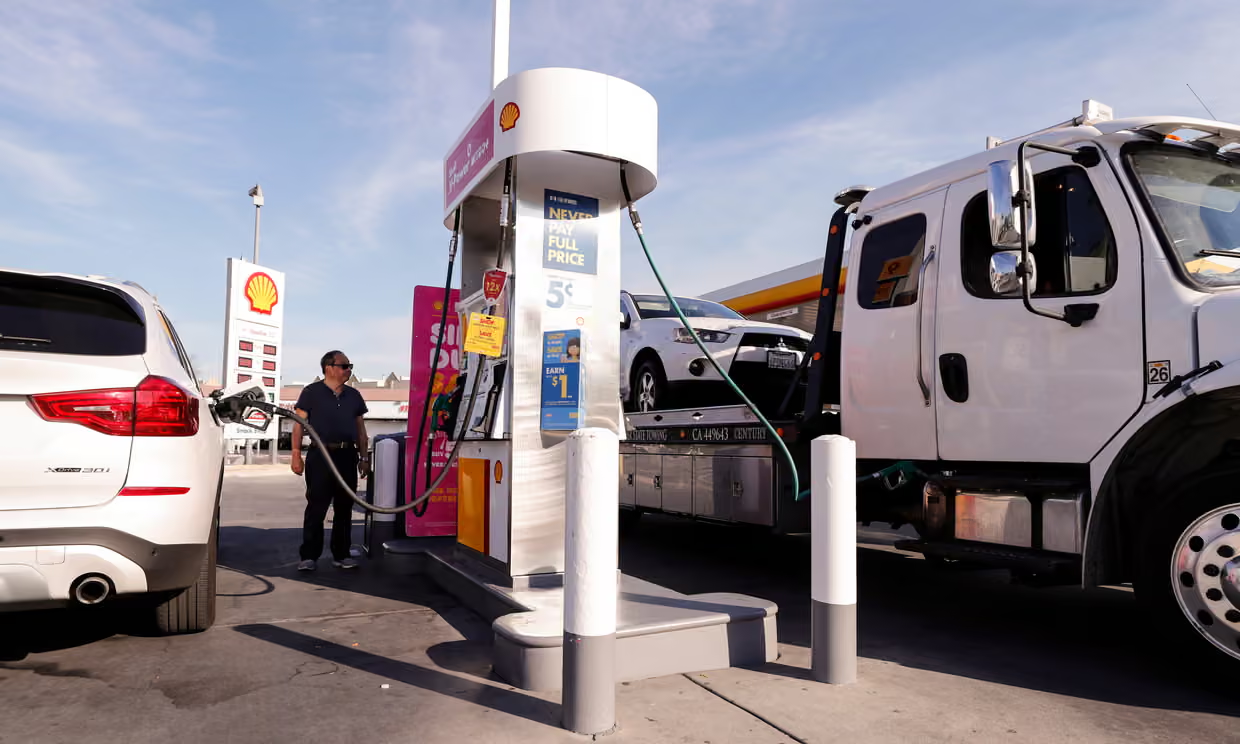
The development has drawn complaints from motorists in Abuja who say the rising cost of Premium Motor Spirit (PMS) is placing additional pressure on their daily expenses.
Fuel that previously sold between N875 and N880 per litre is now being dispensed at significantly higher prices in many stations. Independent fuel marketers currently sell petrol for between N960 and N1,000 per litre, while stations operated by the Nigerian National Petroleum Company Limited (NNPC Ltd.) offer it at around N960 per litre.
The increase has sparked debate among Nigerians, with many questioning the basis for the price adjustment and its broader economic impact.
However, Ene-Ita said the variations being observed at filling stations are typical of a deregulated environment where prices are determined by supply, demand, and other global market conditions.
According to him, he noted that the policy shift was intended to allow competition among marketers, improve efficiency in the sector and attract more investment into the country’s downstream oil and gas industry.
He alos noted that Nigeria has maintained a fully deregulated downstream petroleum system since the current administration came into office, meaning pump prices are no longer fixed by government regulators.