
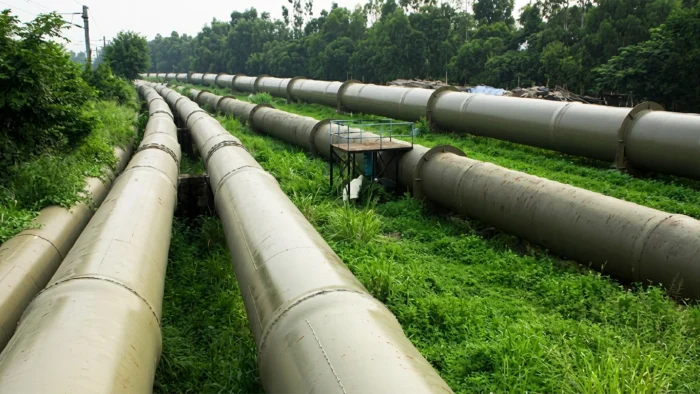
Pipeline vandals and crude oil thieves in Nigeria’s Niger Delta are becoming increasingly difficult to track and arrest as they adopt advanced surveillance systems and coordinated operations to outmaneuver security agencies, Tantita has revealed.
According to Captain Warrendi Enisuoh, Executive Director of Operations and Technical Services at Tantita Security Services Nigeria Limited, criminal networks of pipeline vandals now use technology akin to that employed by official security organizations, such as closed-circuit television (CCTV) systems placed along pipeline routes and deep within forests.
“These criminals now install CCTV to monitor the movement of security agents who are on a mission to catch these pipeline vandals and take them out of their illegal business,” Enisuoh disclosed during a parliamentary roundtable on pipeline security held at the National Assembly in Abuja.
Beyond surveillance, he noted that the groups have evolved into structured operations with command-and-control centres across oil-producing communities, enabling real-time coordination of activities. According to him, some of the syndicates are also heavily armed, with capabilities that pose serious risks to enforcement teams.
According to the expert, crude oil theft has evolved from small-scale vandalism to a sophisticated criminal enterprise due to this level of organization, making enforcement more difficult and risky.
Enisuoh maintained that despite these difficulties, the Federal Government’s pipeline surveillance program, which was implemented in 2022, has assisted in stabilizing the industry and averting a more serious production issue.
“If the government had not done anything about pipeline surveillance in August 2022, the country would have been in trouble,” he said, adding that the contract currently covers over 2,000 kilometres of pipeline infrastructure across seven states.
Also speaking, Managing Director of Tantita, Kestin Pondi, said the intervention has contributed to a rebound in Nigeria’s oil output, which now stands at about 1.84 million barrels per day.
Recall that ENigeria Newspaper reported that even while experts cautioned that the fight against oil theft is becoming more sophisticated and adaptable, lawmakers at the session supported the surveillance framework, calling it as essential to reducing crude theft and safeguarding national revenue.