
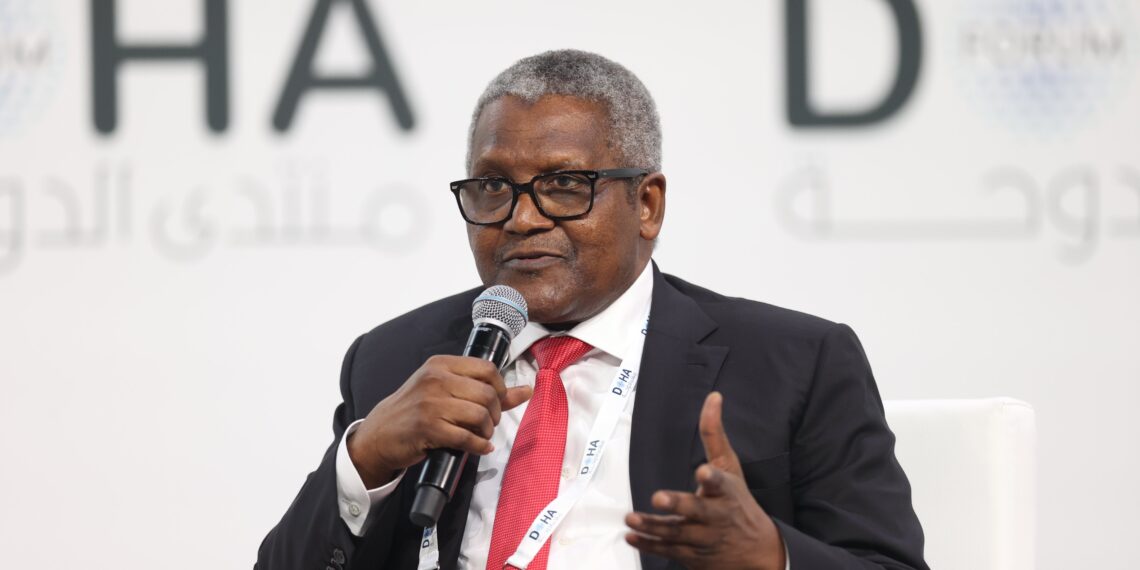
Aliko Dangote, President of the Dangote Group, has unveiled an ambitious plan to expand his business empire into steel production, electricity generation, and port infrastructure, signaling a bold move to accelerate industrialisation across Africa.
Speaking in a recent interview with New York Times, Dangote said the continent cannot remain dependent on raw material exports if it hopes to compete globally.
“We have to industrialise Africa,” he said, emphasizing that refining petroleum is just the beginning of a wider effort to reshape the continent’s economic landscape.
The Dangote Petroleum Refinery & Petrochemicals currently produces around 650,000 barrels of refined products daily, and Dangote projects that output will double within three years as expansion efforts continue.
However, the refinery is just the foundation, he explained, with steel, power, and ports identified as the next pillars of the group’s industrial vision.
Experts note that steel production could place the group at the center of Africa’s construction, infrastructure, and heavy manufacturing sectors. Reliable electricity and efficient port facilities, he added, are critical to overcoming structural obstacles that have slowed the continent’s industrial growth. Dangote referenced the Tata Group of India as a model, citing how diversified, large-scale enterprises can reshape emerging economies through integrated industrial strategies.
With Nigeria projected to require 40 to 50 million new jobs by 2030, Dangote stressed that transformative industrial projects, rather than small-scale interventions, are necessary to absorb the growing workforce. The refinery currently employs about 30,000 people, 80 percent of whom are Nigerians, and total employment is expected to rise to 65,000 as steel, power, and port projects come online.
Dangote also confirmed plans to list shares of the refinery on the Nigerian Stock Exchange, aiming to broaden local investment and give citizens a direct stake in Africa’s largest refining operation.
Despite acknowledging infrastructure gaps and challenges with crude supply, he expressed confidence that these would not derail the long-term strategy.
“Nobody dared to do it, so we did it,” he said, highlighting the role of bold private investment in driving Africa’s industrial future.