
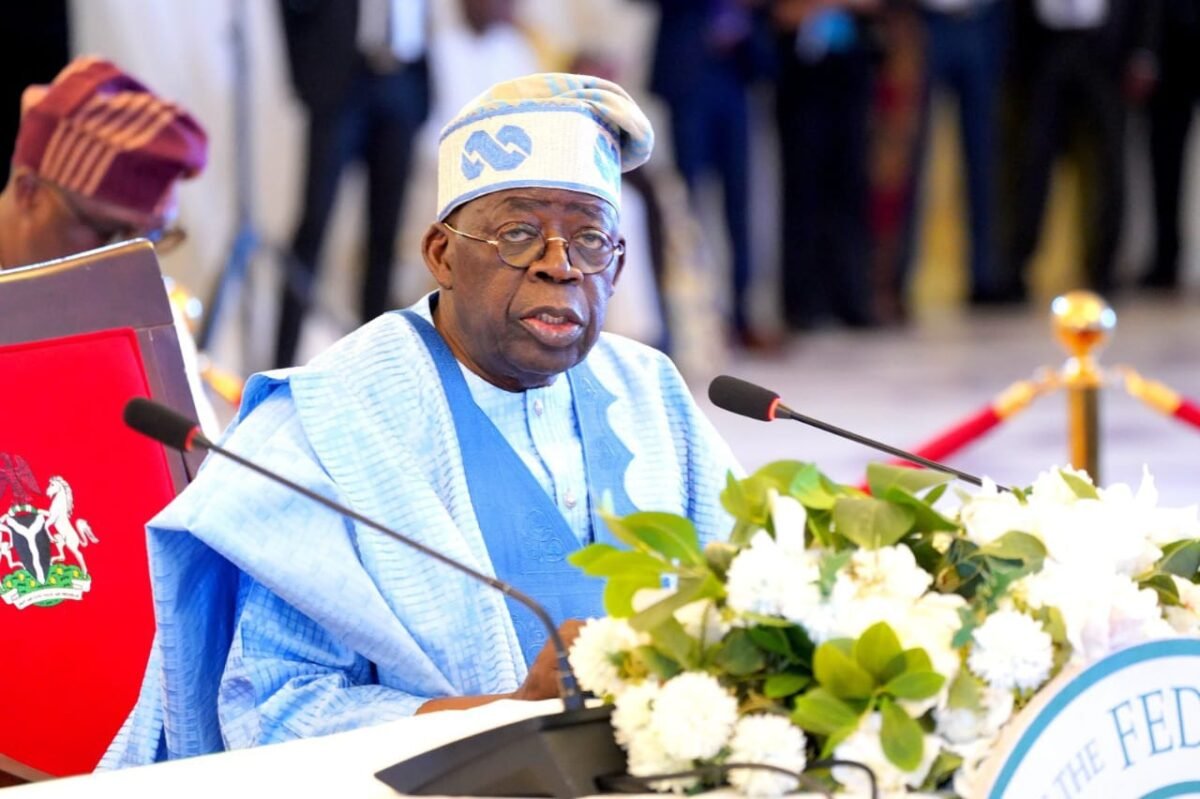
Despite Nigeria’s growing debt load and deteriorating economic situation, President Bola Tinubu has publicly justified his administration’s borrowing binge, saying that taking out loans is nothing to be ashamed of.
In a video that is now making rounds on social media, Tinubu stated, “If we have to borrow money, we will borrow. Money borrowing is not leprosy. All we need to do is put forth a lot of effort to help others.”
Tinubu, however, seems unfazed by the criticism, maintaining that borrowing is still required if it is utilized to finance growth.
President Tinubu’s statements were made in the midst of a widespread outcry from critics who claim that millions of Nigerians are already struggling with unemployment, inflation, and skyrocketing living expenses as a result of the country’s crippling debt load.
Since taking office on May 29, 2023, Tinubu’s administration has authorized and pursued several borrowings totaling tens of billions of dollars from both domestic and foreign sources.
On Tuesday, President Tinubu’s $516.3 million syndicated loan from Deutsche Bank AG to finance Section 1 (Phases 1A and 1B) of the Sokoto–Badagry Superhighway project was authorized by the House of Representatives. On Wednesday, the Senate approved the loan.
The Tinubu-led Nigerian government requested a $2.25 billion loan from the World Bank in June 2024 to support economic reforms, revenue mobilization, and aid for disadvantaged residents impacted by the depreciation of the naira and the withdrawal of subsidies.
Tinubu’s approximately $21 billion external borrowing plan, coupled with €4 billion, ¥15 billion, a $65 million grant, and an additional $2 billion domestic foreign-currency instrument, were approved by Nigeria’s Senate in July 2025.
According to the administration, the money would go toward housing, security, healthcare, education, and infrastructure.
Loan figures under President Tinubu
ENigeria Newpaper can confirm that Nigeria’s public debt has increased significantly under the Tinubu administration, according to official figures.
According to reports, the total amount of state debt was approximately ₦97 trillion at the end of 2023 and increased to ₦144.67 trillion by the end of 2024 due to fresh borrowings and the decline of the naira relative to other major currencies.
According to more recent predictions, the nation’s overall debt is expected to reach approximately ₦159 trillion in 2026, raising concerns that the burden may fall on future administrations.