

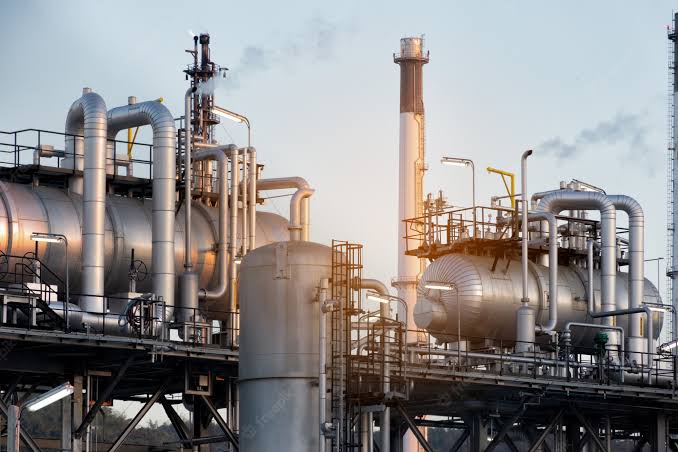
Nigeria’s growing domestic refining capacity, led majorly by the Dangote Petroleum Refinery, is helping to soften the impact of rising global energy costs triggered by escalating tensions between the United States, Israel and Iran, analysts say.
As crude oil prices climbed sharply above $84 per barrel amid the crisis, driving global energy markets into turbulence, many nations that depend almost entirely on imported refined products have faced severe fuel price spikes and supply pressures.
ENigeria Newspaper gathered from analysts that countries such as Ghana, Kenya, Zambia and Sierra Leone, which lack significant domestic refining capacity, have been particularly and largely affected, as compared to Nigeria, because they must import nearly all of their petrol, diesel and cooking gas.
Therefore, in their markets, rising freight costs and higher insurance premiums for vessels transiting conflict‑prone routes like the Strait of Hormuz have translated directly into steep increases at the pump.
In contrast, Nigeria’s local refinery capacity has acted as a buffer. The Dangote Refinery, Africa’s largest single‑train refinery, has continued to supply fuel to the domestic market despite global price volatility. By producing a substantial share of Nigeria’s petrol requirements locally, the country has reduced its reliance on imported products, helping to moderate price spikes that have hit consumers elsewhere.
Industry analysts say this domestic production advantage has not only supported greater fuel availability but also reduced the impact of elevated costs abroad.
While petrol prices have risen in Nigeria as well, the ability to produce locally means the country is less vulnerable than its import‑dependent neighbours.
“For nations without active local refining, take Kenya or Ghana, for example, every dollar increase in crude translates much more quickly into higher fuel costs at home,” said Samuel Gbaye said a recent interview.
“If crude prices surge toward extreme levels, say $200 or even $300 per barrel, that would create major macroeconomic challenges and force central banks to adopt more aggressive monetary tightening,” he added.
In addition, industy experts say that countries without active local refining capacity are also more exposed to rising insurance premiums and freight costs because they must transport refined products over long distances. Nigeria’s domestic refining helps avoid these additional costs, providing a degree of price stability not available to fully import‑dependent markets.
What this indicates, therefore, is that Nigeria’s refinery output continues to act as a strategic buffer, enabling the nation weather international price rises better than many of its African rivals, even as the world’s energy markets remain uncertain.