

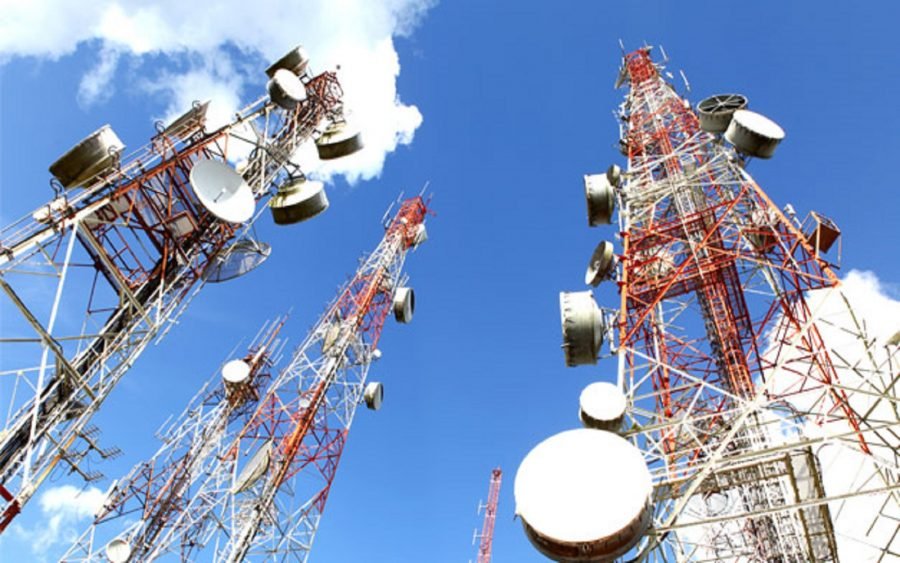
Fears have begun to loom over what is now described as deliberate attacks on telecoms infrastructure across Nigeria ahead of the 2027 elections.
These fears are obviously a result of the factor of INEC’s dependence on a strong telecoms infrastructure in order to be provided with a stable network between field officials, security agencies, and collation centers nationwide for transmission of election results in real-time across all polling places via electronic systems like the INEC Result Viewing Portal.
However, industry workers are worried that a surge in theft of vital resources on telecoms infrastructure, including power systems, fiber optic cables, and base stations could interfere with communication services.
ENigeria Newspaper gathered that Delta, Rivers, Cross River, Akwa Ibom, Ogun, Ondo, Edo, Lagos, Kogi, the Federal Capital Territory, Kaduna, Niger, Osun, and Kwara states are among the hardest-hit areas. There, armed groups and looters frequently target telecom sites, stealing equipment like power cables, rectifiers, feeder cables, solar panels, and diesel.
According to Tony Emoekpere, President of the Association of Telecommunications Companies of Nigeria, the scope of the attacks has elevated the problem above ordinary operational difficulties.
He claims that service interruptions are a direct result of the loss of generators, batteries, and other vital assets.
“Being direct, this issue has moved from being operational to being existential for the industry. We are spending more to protect infrastructure than we should, and that is not sustainable.
“When sites go down, you immediately see increased call drops, poorer voice quality, and slower or completely unavailable data services,” he said.
A report by Punch Newspaper confirmed that it made a call to Bolaji Abdullah who is the spokesperson of the African Democratic Party (ADC) to get an opposition view of the matter. The spokesperson chastised the Federal Government for the problem but decided he was not going to be make the issue more political.
The ADC chieftain said, “What is clear is that the Electoral Act position will not materially change as a result of any assessment of telecoms installations. The concern remains the same: without automatic transmission of election results, electoral processes can be manipulated. Whether or not those vandalising telecoms installations are attempting to justify this situation is, in my view, not significant.
“However, some issues go beyond politics. It is essential to understand that without adequate telecoms infrastructure in critical parts of the country, the ability of security agencies to coordinate effectively would be severely limited. Not everything should be politicised.
“When telecoms infrastructure is vandalised and perpetrators are not held accountable, it reflects an inability by the government to adequately protect critical national assets. Ultimately, if infrastructure and citizens cannot be protected, it raises serious concerns about governance effectiveness”, he said.
The report also confirmed that it made a call to the Independent National Electoral Commission (INEC) on the issue.
In response, Victoria Eta-Messi, the Independent National Electoral Commission’s Director of Voter Education and Publicity, stated that the commission was aware of the issues and would take appropriate action.
“The commission will address the issue, identify what the challenges are, and make them known,” she said.
Telecoms companies ahead of 2027 elections
Back in February, major telecom companies have affirmed that Nigeria’s telecom network can allow the electronic transmission of election results in real-time.
Following a collaborative technical review with the Nigerian Communications Commission and major telecom providers, the Independent National Electoral Commission also reported that 93% of polling places nationwide have mobile network connectivity.