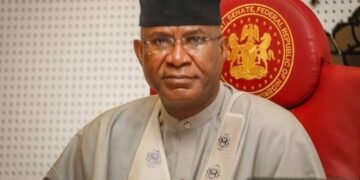

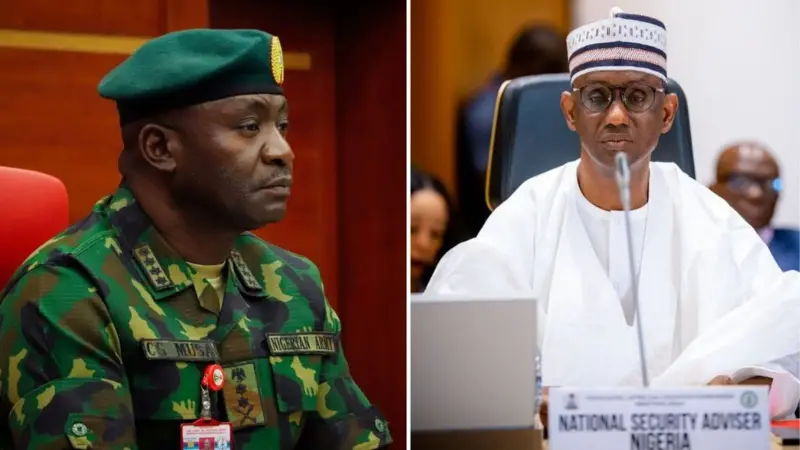
Nigeria’s Defence Minister, Christopher Musa, accompanied President Bola Tinubu on the ongoing state visit to the United Kingdom yesterday, even as the country grapples with escalating security challenges, particularly in the North-East.
The trip comes amid renewed attacks by insurgent groups in Borno State, where military formations and civilian communities have faced coordinated assaults, leading to casualties among security personnel, loss of ammunition, abductions, and killings. The intensity of the attacks reflects the fragile security situation in the North-East and the persistent threat posed by factions of Boko Haram and Islamic State West Africa Province.
Beyond Borno, states across the North-West and North-Central regions continue to experience banditry, mass kidnappings, and communal violence, while parts of the South-West have also recorded sporadic attacks, highlighting the multi-regional nature of Nigeria’s security crisis.
Despite these challenges, the Defence Minister joined President Tinubu at high-level engagements in the UK, including meetings with King Charles III, Queen Camilla, and British government officials, as well as discussions on bilateral cooperation in defence, security, and investment.
In addition, the presence of Nuhu Ribadu, who is Nigeria’s Chief Security Adviser, at the visit in the UK raises more pressing concerns. Given the deteriorating security situation at home, particularly the triple attacks in Borno State that resulted in 23 fatalities and 108 injuries, the absence of Ribadu, who coordinates Nigeria’s security and intelligence framework, and Musa, who supervises the nation’s military operations, in Nigeria does not seem to have gone down well with Nigerians.
However, government officials close to the presidency insist that senior commanders on the field are in charge of security operations and that the Defense Minister’s overseas presence won’t interfere with operational response or plan. In order to handle cross-border insurgency, regional instability in the Sahel, and the larger security architecture, some sources contend that bolstering international relationships is essential.
Sources also told ENigeria Newspaper that President Tinubu and his delegation, which includes the defense minister, are anticipated to address regional stability, investment promotion, and bilateral defense and security cooperation while on the trip. The agenda also includes cultural and community events that highlight the Nigerian diaspora’s contributions to British society while fostering understanding and cooperation between the two countries.
As the state visit proceeds, political observers say that the administration must simultaneously reassure the public that internal security is still a top concern and project unity and stability on a global scale.