
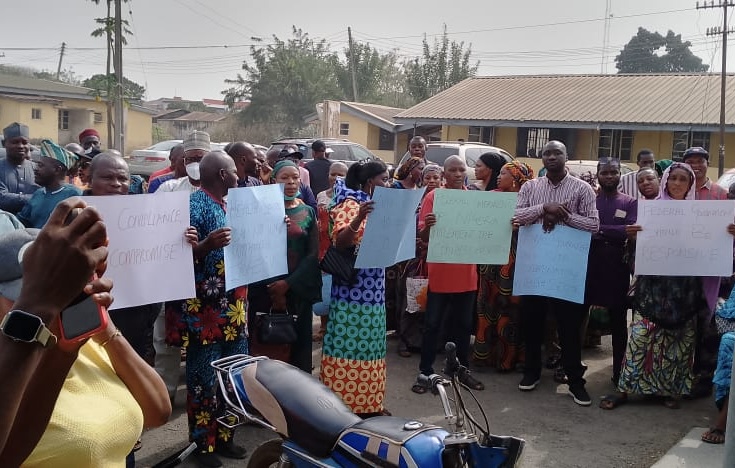
Today at the National Assembly in Abuja, healthcare workers from the Joint Health Sector Unions (JOHESU) and the Assembly of Healthcare Professional Associations are scheduled to demonstrate against proposed reforms that they believe might upset the nation’s healthcare system and exacerbate already-existing issues.
The demonstration will see participants gather at Unity Fountain before moving to the National Assembly Complex, as unions mobilise members nationwide to resist the Health Sector Executive Bills 2026 currently before lawmakers.
The bills, which were sent to the Senate on the 27th of January, contain proposed amendments are aimed at streamlining governance structures across health institutions by reducing bloated board memberships. It also covers a wide range of health institutions and regulatory bodies, including tertiary and teaching hospitals, specialty hospitals, professional councils and regulatory agencies.
In a directive issued ahead of the protest and obtained by ENigeria Newspaper, JOHESU called for mass participation, describing the moment as decisive for the future of health professionals in the country. The union expressed concern that the bills, already passed for first reading in the Senate, could alter existing structures, roles, and welfare arrangements within the sector.
“Our members must educate the general public on how the Health Sector Executive Bills 2026 affect their respective professions in particular and the health sector in general,” said JOHESU National Secretary, Martin Egbanubi.
He further urged strong turnout, adding, “Your participation in this historic existential struggle is highly solicited and essential.”
Beyond legislative issues, the unions contend that the proposed reforms run the risk of exacerbating disparities within the health system, particularly in light of worries about specific professional groups controlling decision-making processes.
JOHESU, which comprises significant organizations including the Nigeria Union of Allied Health Professionals and the Medical and Health Workers Union of Nigeria, has a history of challenging the government on matters ranging from hazard allowances to pay structures.
The proposed action coincides with long-standing tensions in Nigeria’s health sector, where disagreements about policy control, welfare, and professional recognition have frequently led to strikes and service interruptions. Health workers caution that the proposed legislation could further destabilize healthcare delivery, as the system is already burdened by brain drain, a lack of workers, and poor infrastructure.