

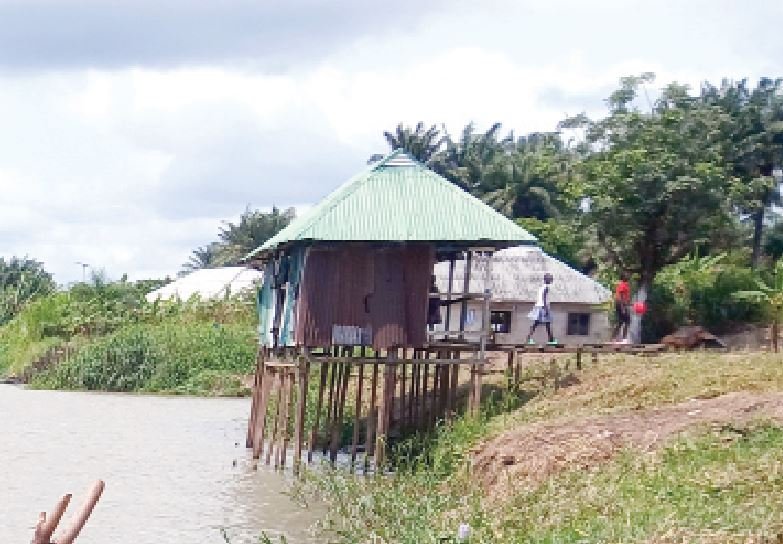
Residents of Delta community Torugbene in the Burutu Local Government Area are worried about their health getting worse because they have to rely on a river that is polluted with human waste, and the state government has not yet responded to their concerns.
ENigeria Newspaper learnt, in a Saturday Exclusive by Punch, that the crisis has been linked to a number of child deaths and illnesses that keep coming back in the riverine Delta community, where there is no working borehole or other source of clean water.
For 26-year-old Adaobi Ogbemudia, the tragedy is deeply personal. She lost her five-month-old son, Freedom, after repeated bouts of illness linked to the community’s water source. Recounting the final moments, she said, “We kept taking him to the health centre. They gave him antibiotics and later referred us to Bomadi, where he was admitted for a week.”
Findings in the exclusive also revealed that residents rely entirely on the Torugbene River for drinking, cooking, bathing, and washing, despite visible contamination. The waterway, however, is littered with waste, while makeshift toilets built above the river discharge human waste directly into it.
A resident, Florence Akpule, acknowledged the danger but said there was no alternative. “We know the water is not clean, but there is no other option. It has become part of our lives,” she said.
In fact, children in the community are not spared. A young resident, identified as Aboy said that the water is being used to drink and cook, referring to the same river where people bathe and defecate. The situation has also overwhelmed the only primary health centre in the area, which lacks basic equipment, personnel, and even clean water.
The Community Health Officer, Evelyn Fufeyin, claims that staff members rely on the same contaminated supply and that cholera, vomiting, and diarrhea are common, especially in youngsters.
“Truly, we don’t have water. We fetch water from the same river. It is increasing the health risk because we don’t have any other option,” she said.
Health professionals also ehoed the concerns of community health officer Evelyn Fufeyin, cautioning that these circumstances put locals at risk for fatal illnesses. They pointed out that diseases like cholera, typhoid, and hepatitis can spread through contaminated water, and referred to many of these illnesses as “slow killers” that frequently go undetected until they become serious.
Despite years of government pledges and funding for water projects throughout the state, community leaders claim the situation has continued in this Delta community.
As of the time when Punch filed this exclusive, no response had been received despite numerous attempts to contact officials, including Charles Aniagwu, the Commissioner for Works and Public Information of Delta State.
In the meantime, despite growing health concerns and avoidable fatalities, many residents in this Delta community, nonetheless, depend on the contaminated river for survival.