
Nigeria’s deradicalization effort, through terrorists rehabilitation facility centres, has come at a high cost of N604,825,797.09.
According to new spending records, the Federal Government’s non-kinetic counterterrorism strategy has directed millions of naira toward terrorists rehabilitation facilities and reintegration assistance.
The data, which was acquired on Monday from the civic accountability platform Govspend, shows a number of payments related to the building of dorms, consulting services, and statutory tax remittances associated with terrorists rehabilitation facilities for former insurgents as part of the Operation Safe Corridor initiative.
First of these expenses is a N47.4 million consulting contract issued in December 2022 for the oversight and creation of a bill of quantities for rehabilitation work at the Kirikiri Medium Security Custodial Center is at the heart of the expense.
According to new payments, N41.7 million was paid in December 2024 for the construction of additional dormitories in Mallam Sidi, Gombe State, which is a crucial facility for the reintegration and deradicalization of former combatants.
The record also shows that a contractor that got multiple payments, including N151.8 million in May 2024 and an earlier N303.7 million in March 2023 as part of phased funding for dormitory building at the Operation Safe Corridor camp, accounted for the majority of the expenditure.
Millions of naira in Value Added Tax and withholding tax related to the same projects were among the associated tax remittances sent to the Federal Inland Revenue Service.
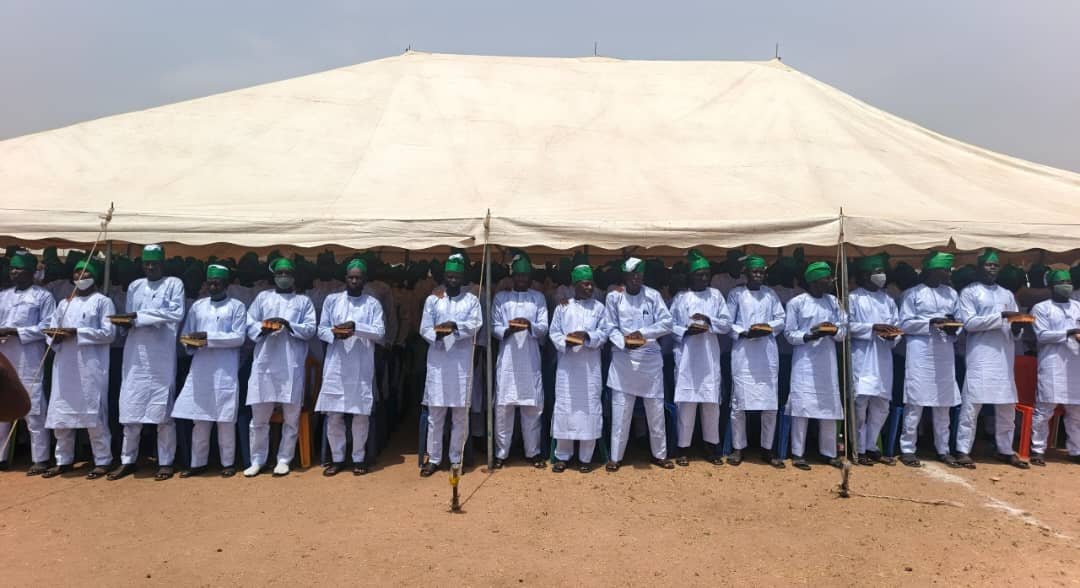
According to government statistics, obtained by ENigeria Newspaper, 744 people, 736 Nigerians and eight foreign nationals, have undergone deradicalization as part of the ongoing expansion of the rehabilitation programme just last week. Beneficiaries are dispersed among a number of states, with Borno having the largest number.
A breakdown of the 744 people in the terrorists rehabilitation programme shows that two are from Abia State, 10 from Adamawa State, one from Akwa Ibom State, two from Anambra State, 12 from Bauchi State, 597 from Borno State, three from Ebonyi State, one from Enugu State, 15 from Kano State, three from Katsina State, one from Kebbi State, five from Kogi State, four from Nasarawa State, two from Niger State, two from Plateau State, two from Sokoto State, and 58 from Yobe State.
There are also foreign nationals, including four from the Niger Republic, two from Chad, one from Burkina Faso, and one from Cameroon. Additionally, 11 grads are Christians and 733 are Muslims.
Reactions to terrorists rehabilitation programme
Despite outrage from Nigerians who describe rehabilitation of terrorists, the Chief of Defence Staff has defended the program, pointing out that it attempts to lessen radical ideology and advance long-term security, and characterized it as an essential part of efforts to stop violent extremism.
Recall in March of 2026, ENigeria Newspaper reported that the Chief of Defence Staff, Gen Olufemi Oluyede, emphasized that Nigeria can enhance national stability and gather actionable intelligence through the controlled rehabilitation of surrendered terrorists.
“When properly screened and coordinated, surrender pathways degrade insurgent cohesion, generate actionable intelligence, and support long-term stability,” he stated.
Over the years, the federal government has estsblished several terrorists rehabilitation centres across the northern region.