
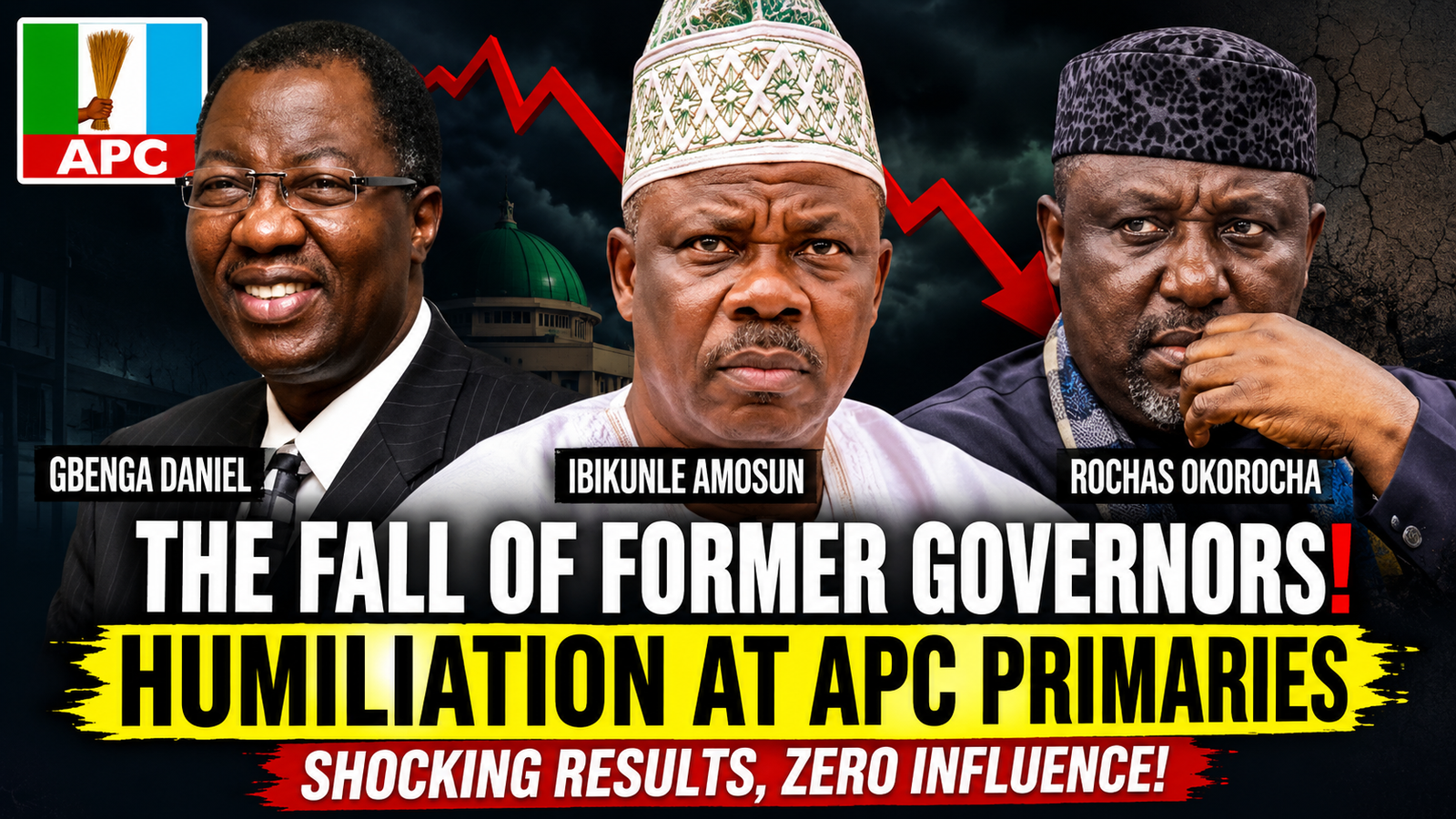
APC Primaries 2026: Nigeria’s political landscape witnessed one of its biggest power shifts after several former governors suffered shocking setbacks during the recent All Progressives Congress (APC) primaries ahead of the 2027 elections.
For years, names like Gbenga Daniel, Ibikunle Amosun, and Rochas Okorocha dominated political conversations in their respective states. They controlled party structures, influenced elections, and built powerful political networks that once appeared untouchable.
But the APC primaries 2026 revealed a different reality.
The elections exposed how rapidly political influence can fade, especially inside a party where new alliances, governors, and emerging power blocs now control the direction of events.
What shocked many observers was not merely that these former governors lost political ground. it was the humiliating scale of some of the defeats and withdrawals.
How APC’s Internal Power Structure Changed
The APC primaries 2026 across multiple states became a battle between old political empires and newer political structures loyal to incumbent governors and rising party leaders.
In several states, sitting governors and incumbent senators consolidated party machinery ahead of the primaries, leaving many former governors politically isolated.
Political analysts believe the primaries reflected three major realities:
- Incumbent governors now dominate most APC structures
- Old political alliances have weakened significantly
- Grassroots loyalty has shifted toward newer power centers
The outcome immediately triggered nationwide discussions about the declining influence of some former governors who once controlled their states almost absolutely.
Gbenga Daniel’s Political Setback in Ogun State
Gbenga Daniel once stood as one of the most influential politicians in Ogun State politics.
Daniel served as Governor of Ogun State from 2003 to 2011 under the Peoples Democratic Party before later aligning with the APC.
For years, he remained politically relevant through his deep grassroots network and strategic alliances. However, the APC primaries 2026 exposed how much the political environment in Ogun has changed.
According to reports from the primaries, Daniel stayed away from the APC senatorial exercise amid growing tension and concerns over possible violence. His media aide later explained that the former governor withdrew to avoid political conflict and bloodshed.
His absence was widely interpreted as a major political retreat.
Many analysts believe Daniel realized that the existing APC structure in Ogun no longer favored his ambitions.
The situation became even more symbolic because consensus arrangements dominated the exercise, leaving little room for old political heavyweights attempting comebacks.
Ibikunle Amosun’s Humiliating Collapse
Ibikunle Amosun suffered what many political observers have described as one of the most devastating political blows of the APC primaries 2026.
Amosun governed Ogun State from 2011 to 2019 and later became senator representing Ogun Central. During his peak years, he controlled one of the strongest political structures in the South-West.
His political influence was once so powerful that many politicians depended heavily on his endorsement to survive politically.
However, the recent APC primaries revealed a dramatic collapse of that dominance.
ENigeria Newspaper reports that informed sources from Ogun APC circles indicated that Senator Shuaib Afolabi Salisu overwhelmingly defeated Amosun during the Ogun Central APC senatorial primaries.
The reported figures shocked many Nigerians:
- Shuaib Afolabi Salisu – 87,800 votes
- Ibikunle Amosun – 146 votes
The margin immediately became one of the most discussed political stories in Nigeria.
Several factors reportedly contributed to Amosun’s collapse:
1. Loss of APC Structure
Governor Dapo Abiodun’s camp gradually took control of Ogun APC after 2019, weakening Amosun’s influence.
2. Rise of New Political Actors
Younger politicians and newer alliances became dominant within the state’s APC framework.
3. Institutional Backing for Incumbents
Sitting office holders and party stakeholders openly aligned with Salisu.
4. Declining Grassroots Mobilization
Many analysts believe Amosun’s once-powerful grassroots machinery has weakened significantly.
For many Nigerians, the result symbolized the end of an era in Ogun politics.
Rochas Okorocha’s Declining Political Relevance
Rochas Okorocha also faced another painful reminder of how drastically political fortunes can change.
Okorocha served as Governor of Imo State from 2011 to 2019 and later became senator representing Imo West. He was once regarded as one of the most influential political figures in the South-East.
At the peak of his influence:
- He controlled major political appointments in Imo
- Built a strong political dynasty
- Influenced legislative structures
- Installed loyalists into strategic positions
However, his political empire began weakening after his fallout with APC leadership and the rise of Governor Hope Uzodimma’s structure in Imo politics.
Although the latest APC primaries 2026 did not produce the kind of direct vote humiliation seen in Amosun’s case, political observers noted that Okorocha’s camp appeared significantly weakened and politically sidelined during the party’s internal arrangements.
His reduced influence within APC structures became increasingly visible compared to previous election cycles.
For many analysts, the decline of Okorocha reflects how rapidly political structures can collapse once control of state machinery is lost.
The Bigger Message From the APC Primaries
The APC primaries 2026 delivered a strong message across Nigeria’s political landscape:
No political empire is permanent.
Several former governors who once controlled delegates, lawmakers, and state party structures now find themselves struggling against newer political coalitions.
The emergence of incumbent governors as dominant party leaders has also reshaped APC politics nationwide.
Political analysts believe the primaries highlighted a growing trend in Nigerian politics where:
- Governors now hold stronger influence over party structures
- Former office holders lose leverage once out of power
- Political loyalty shifts quickly toward current power centers
Scores and Outcomes From Key APC Political Battles
| Political Figure | Position Contested | Outcome |
|---|---|---|
| Ibikunle Amosun | Ogun Central Senatorial Primary | Lost with 146 votes |
| Shuaib Afolabi Salisu | Ogun Central Senatorial Primary | Won with 87,800 votes |
| Gbenga Daniel | Ogun Senatorial Contest | Withdrew/Stayed Away |
| Rochas Okorocha | APC Internal Influence Battle | Politically sidelined |
Public Reactions Across Nigeria
The primaries triggered massive reactions online and across political circles.
Supporters of the newer APC structure described the results as proof that political power must evolve with changing realities.
Critics of the former governors argued that many of them became disconnected from grassroots politics after leaving office.
Others, however, warned that humiliating political heavyweights could deepen internal divisions inside the APC ahead of the general elections.
Political commentators also noted that the APC primaries may influence how future political alliances are formed across several states.
Why These Defeats Matter
The political setbacks suffered by Daniel, Amosun, and Rochas go beyond ordinary primary elections.
These men were once among the most powerful governors in Nigeria.
Their struggles now reveal:
- The fragility of political structures
- The importance of incumbency in Nigerian politics
- How quickly party loyalty can shift
- The growing dominance of newer political blocs
For younger politicians across Nigeria, the APC primaries have become a lesson in how political relevance must constantly be rebuilt.
Latest Developments After the Primaries
Following the primaries, APC stakeholders in several states have intensified reconciliation efforts to prevent internal crises ahead of the 2027 elections.
Meanwhile, political observers continue to monitor whether the affected former governors will:
- Remain inside APC
- Challenge the outcomes politically
- Build new alliances
- Reduce their political activities
The coming months are expected to reshape political calculations further as preparations for the 2027 elections intensify.
The recent APC primaries may ultimately be remembered as one of the biggest political turning points in recent Nigerian politics.
The fall of powerful former governors like Gbenga Daniel, Ibikunle Amosun, and Rochas Okorocha showed how quickly political dominance can fade once party structures change hands.
While some quietly stepped aside, others suffered shocking defeats that exposed the new balance of power within the APC.
As Nigeria moves closer to the 2027 elections, one reality has become increasingly clear: political relevance in modern Nigerian politics depends less on past glory and more on current control, alliances, and grassroots influence.