
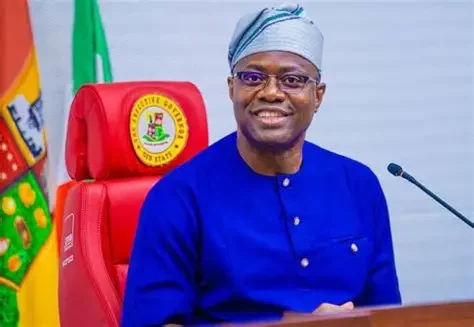
The governor of Oyo, Seyi Makinde, has warned against attempts at one-party dominance in Nigeria by citing the bloody political past of “Operation Wetie.”
Speaking at the All Opposition Political Party Leaders national summit in Ibadan, Makinde expressed worries about the increasing attempts to unify legislative power under a single party as opposition groups struggle with internal conflicts and legal disputes.
“For those that are carrying on as if there’s no tomorrow. They should remember that “operation wetie” started from here. This is the same Wild Wild West,” Makinde said.
“Back in 1950, this city hosted a conversation that helped shape Nigeria’s constitutional future. Those discussions were not perfect but necessary. They were driven by a recognition that the structure of the nation was a deliberately built, protected and well necessary debated. In many ways, this gathering carries the same responsibility.
“There are open efforts to consolidate legislative control under one party. At the same time, opposition parties are increasingly entangled in internal crises and legal battles that raise serious questions about their ability to function effectively”, he added.
However, ENigeria Newspaper note that the governor’s remarks reflecting the unpleasant moments in South West and Nigeria at a time when political violence was rift has awaken memories that would many would want to easily forget.
While some intepret the remarks as his signifying that opposition parties would begin a total sweep in the scheme of national affairs, some believe that the governor is inciting violence because it was the activity that earmarked the period of Operation Wetie.
What exactly was Operation Wetie?
With its epicenter in Ibadan, “Operation Wetie” was a campaign of extreme political violence that shook Nigeria’s western region in the middle of the 1960s.
The term referred to the practice of dousing political opponents, their homes, and their cars with gasoline before setting them on fire was referred to by this name.
Early in the 1960s, Nigeria’s political system saw a sharp increase in violence, which prompted the implementation of Operation Wetie, which deployed political gangs to sabotage elections. The term was largely utilized when Chief Ladoke Akintola and Chief Obafemi Awolowo engaged in a protracted struggle for supremacy in 1962. This resulted in a high rate of violence and acts of lawlessness, with lawmakers in the Western regional parliament engaging in brutal physical combat.
Despite starting in 1962, it basically started a series of events that culminated in Nigeria’s first military coup on January 15, 1966.
By November 1, 1965, fifteen people had died in the Operation Wetie violence at Ekiti, and twenty more had died in another riot four days later. On November 7, 1965, sixteen individuals were slain in the Ondo and Ijebu-Ode regions.
Tension and wanton destruction of people’s lives and property were there, and due to thugs and criminals who took matters into their own hands while the police failed to uphold law and order, houses and cars were set on fire, and traveling inside the Western Region and from other regions into the West was dangerous.
Curfews were imposed in Mushin, Ikeja, Agege, Ajeromi, and Awori districts by the NNDP Government of the Western Region while the Operation Wetie rioting and killings persisted. However, the unrest persisted, with new incidents of rioting, arson, looting, and murder occurring every day.
Nigerians begged the Federal Government to intervene and stop the situation in the region, but their requests went unanswered.